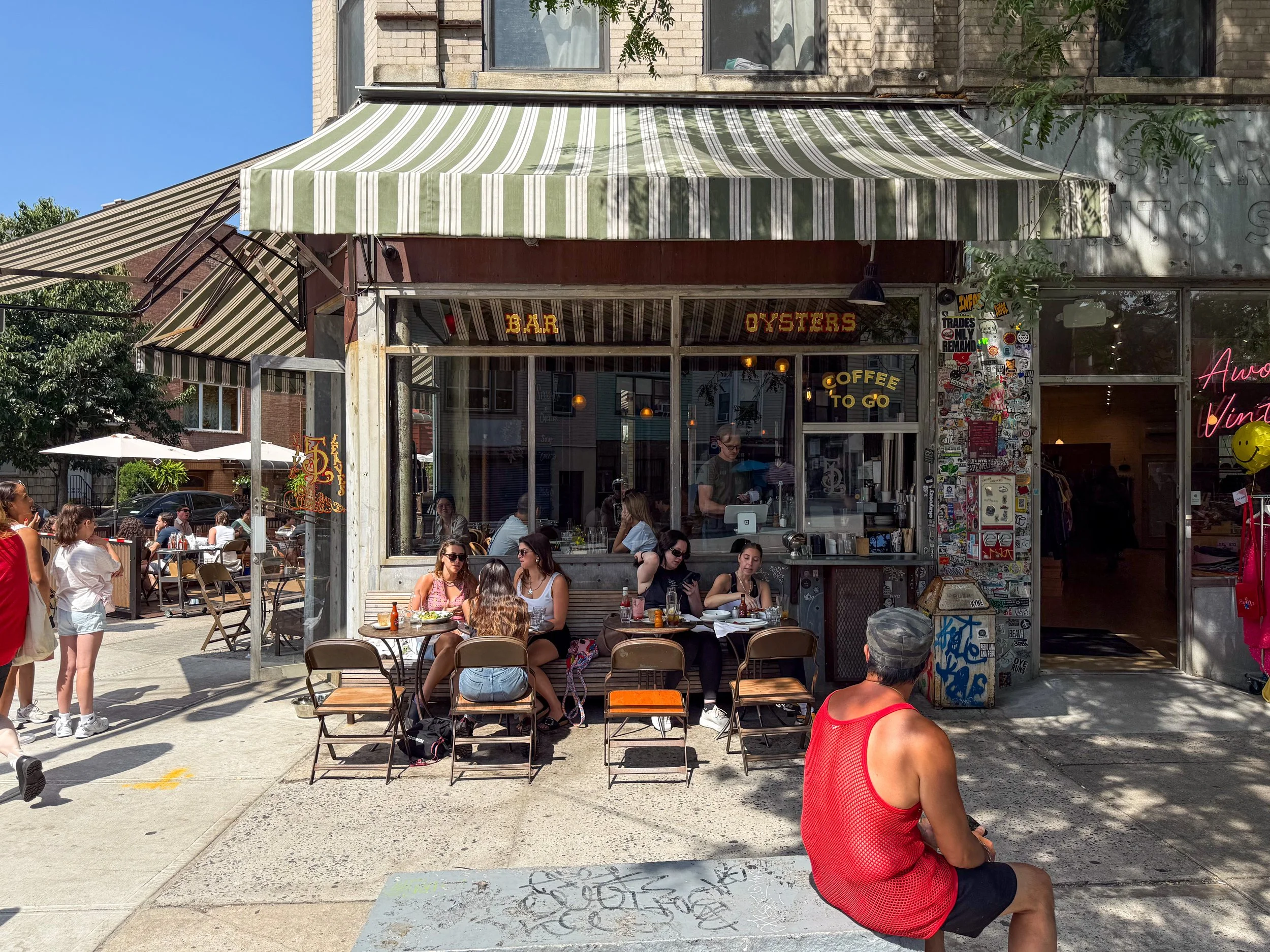
DUMBO, Brooklyn
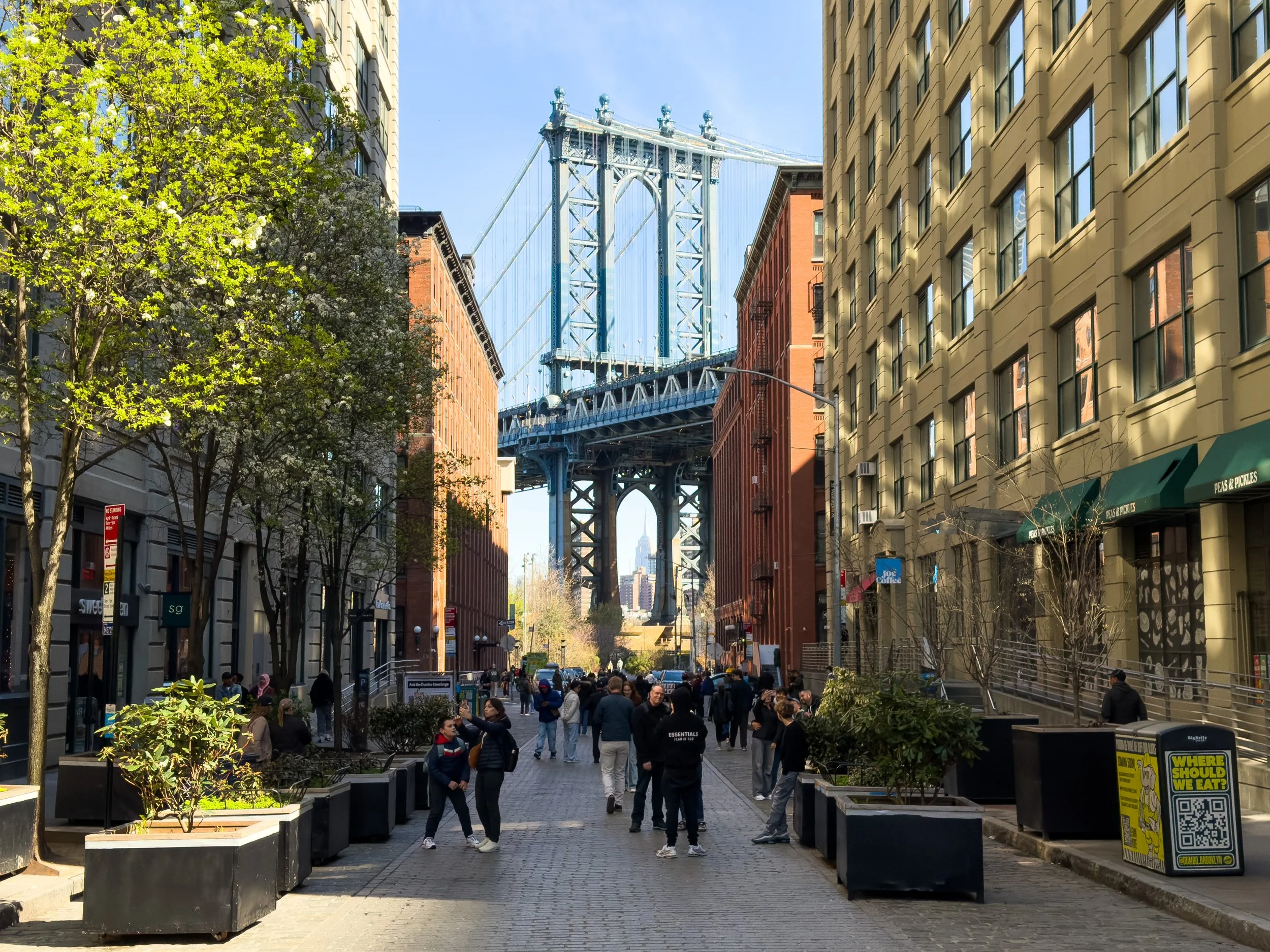
DUMBO is defined by converted warehouse lofts, a preserved industrial streetscape, and direct access to the Brooklyn waterfront. Its combination of adaptive reuse architecture, limited new development, and proximity to Manhattan supports a market shaped by constrained inventory, distinct housing stock, and consistently strong demand for larger, loft-style residences.
DUMBO
1. Neighborhood: Former industrial waterfront district defined by converted warehouse lofts, cobblestone streets, and direct views of the Manhattan skyline.
2. Conveniences: Brooklyn Bridge Park waterfront access; Empire Stores; localized restaurants, retail, cafés, and amenities infrastructure integrated into the neighborhood core.
3. Transit: F at York Street; A, C at High Street; East River Ferry; Citi Bike; direct bridge access to Manhattan and Downtown Brooklyn.
4. Real Estate: Loft-style condominiums, adaptive reuse warehouse conversions, and select ground-up luxury developments with a predominantly condo-driven market.
The Vibe at a Glance
DUMBO combines an industrial architectural framework with a more contained residential feel shaped by its waterfront location and limited footprint. Wide streets, converted warehouse buildings, and direct access to Brooklyn Bridge Park create a sense of openness that contrasts with more densely built neighborhoods. Daily life centers around a compact network of cafés, small retail, and public space along the waterfront and key corridors, giving the neighborhood a steady, localized rhythm. Its proximity to Manhattan, paired with constrained inventory and a highly specific housing stock, contributes to a market defined by limited turnover and sustained demand. Thinking of buying or selling in DUMBO? Get tailored insights into the local market—let’s start the conversation.
DUMBO, Brooklyn 11201
Neighborhood
North to South: John St. (East River) to York St.
East to West: Brooklyn Bridge Promenade to Bridge St.
Nearby Neighborhoods: Brooklyn Heights, Vinegar Hill, Downtown Brooklyn, Fort Greene
MTA Lines
(F) (A) (C) (2) (3)
Local Commute Times
Financial District: 25m train, 20m car
Union Square: 25m train, 28m car
Grand Central: 30m train, 30m car
Prospect Park: 25m train, 20m car
DUMBO
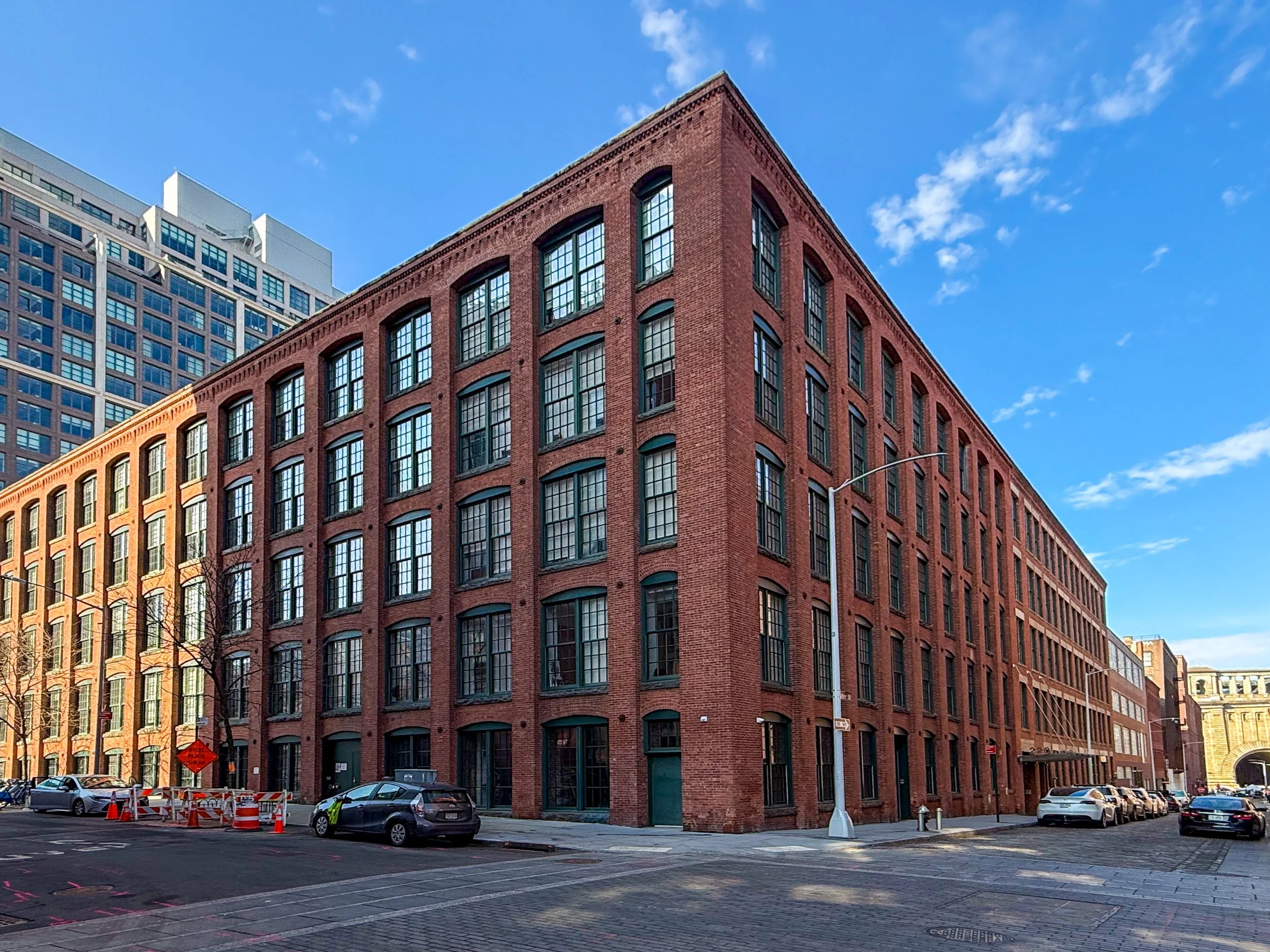
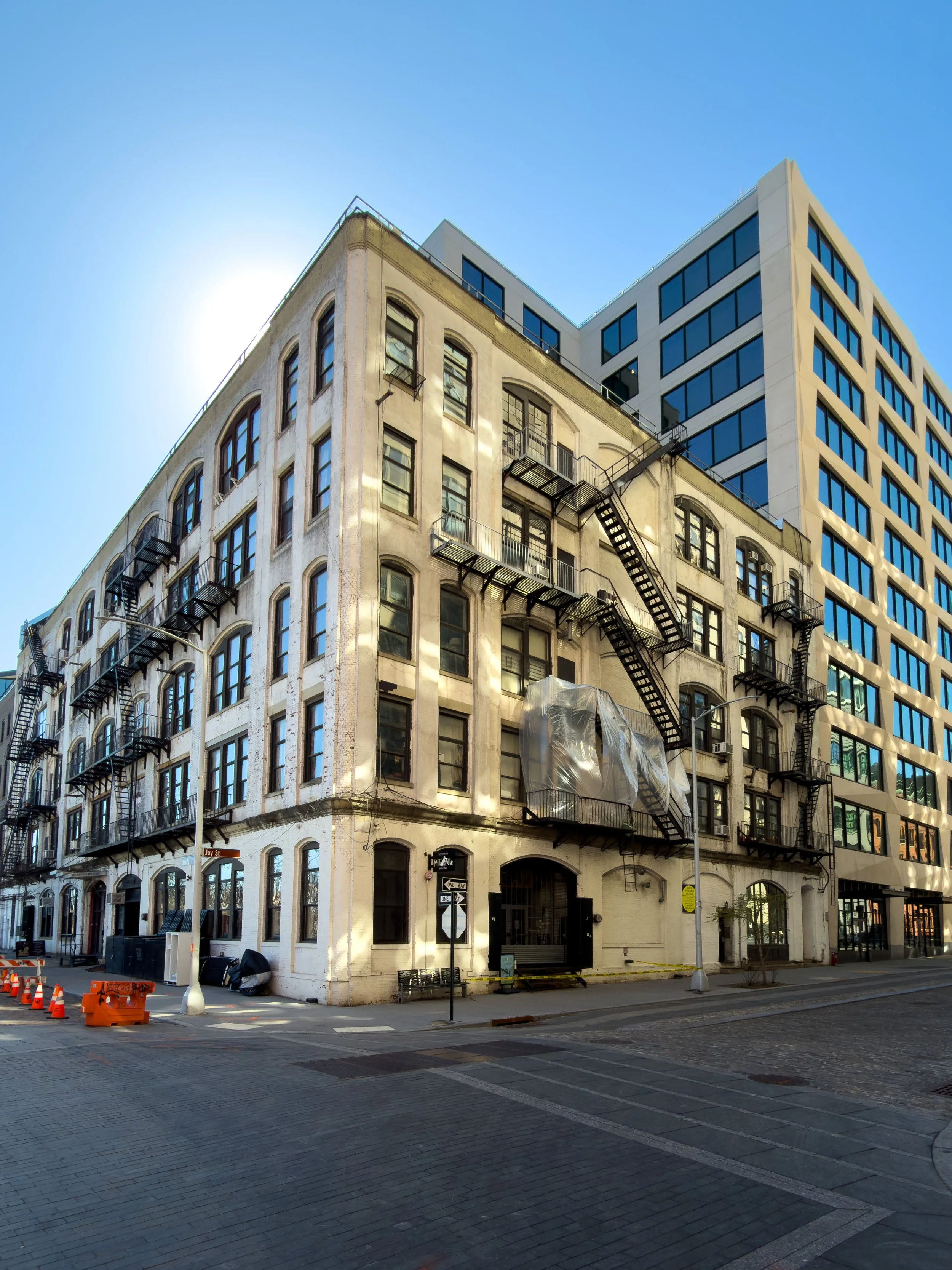
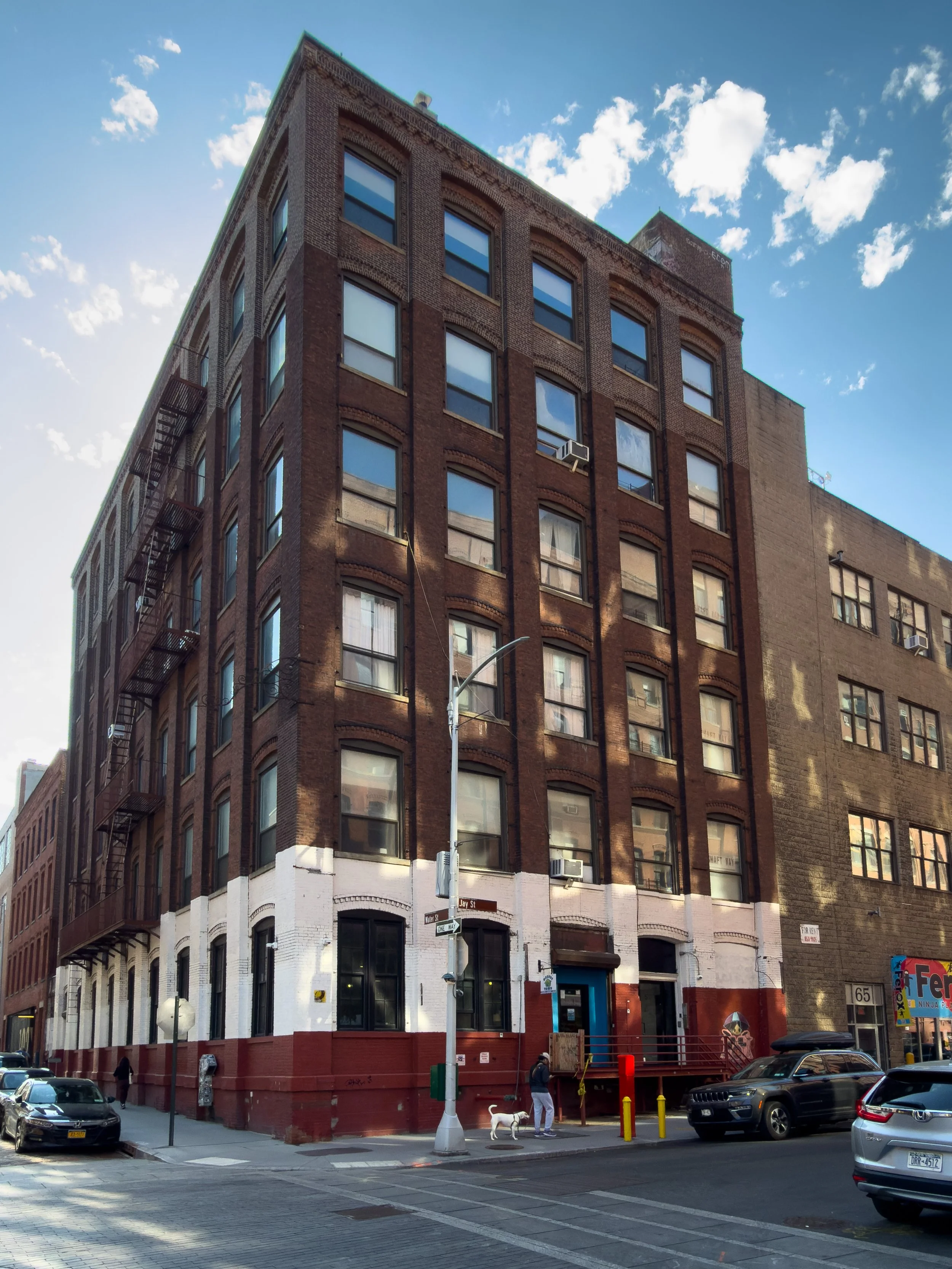
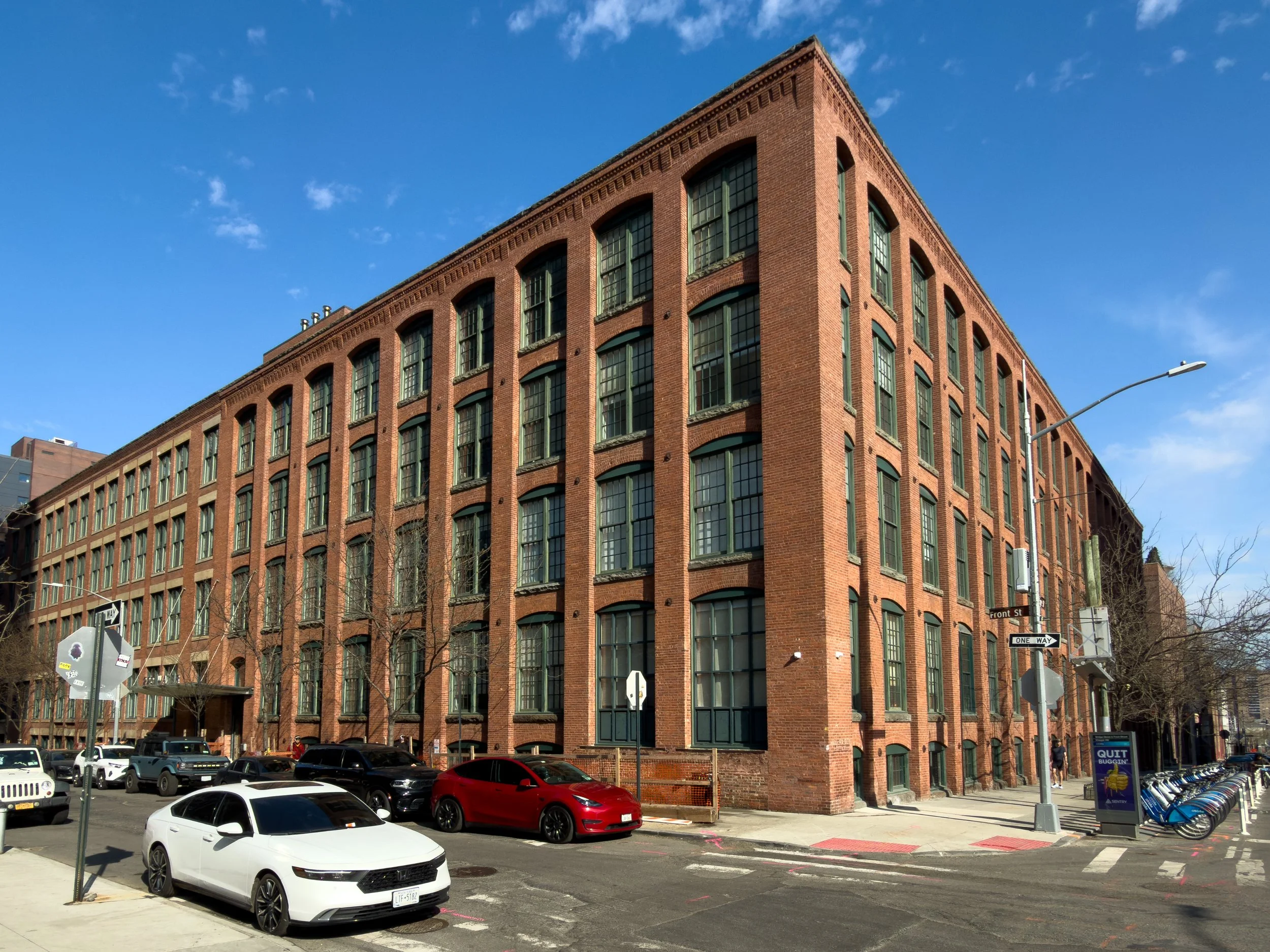
DUMBO—short for Down Under the Manhattan Bridge Overpass—occupies a narrow stretch of Brooklyn waterfront defined by converted industrial buildings, warehouse-scale lofts, and a limited number of newer condominium developments woven into a historic streetscape. The neighborhood’s housing stock is shaped by its past as a manufacturing and shipping hub, with many of its residential buildings emerging from adaptive reuse rather than ground-up construction.
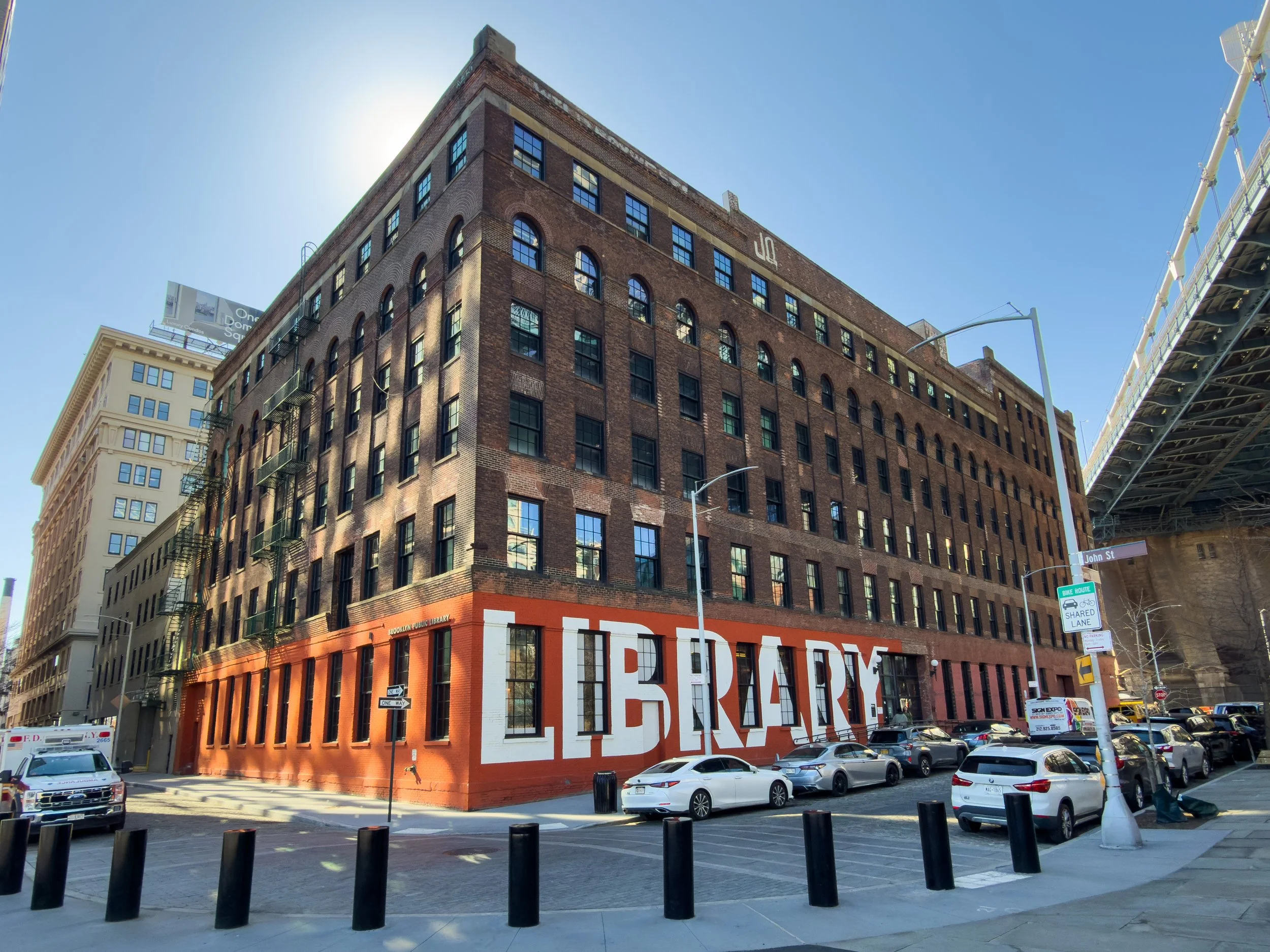
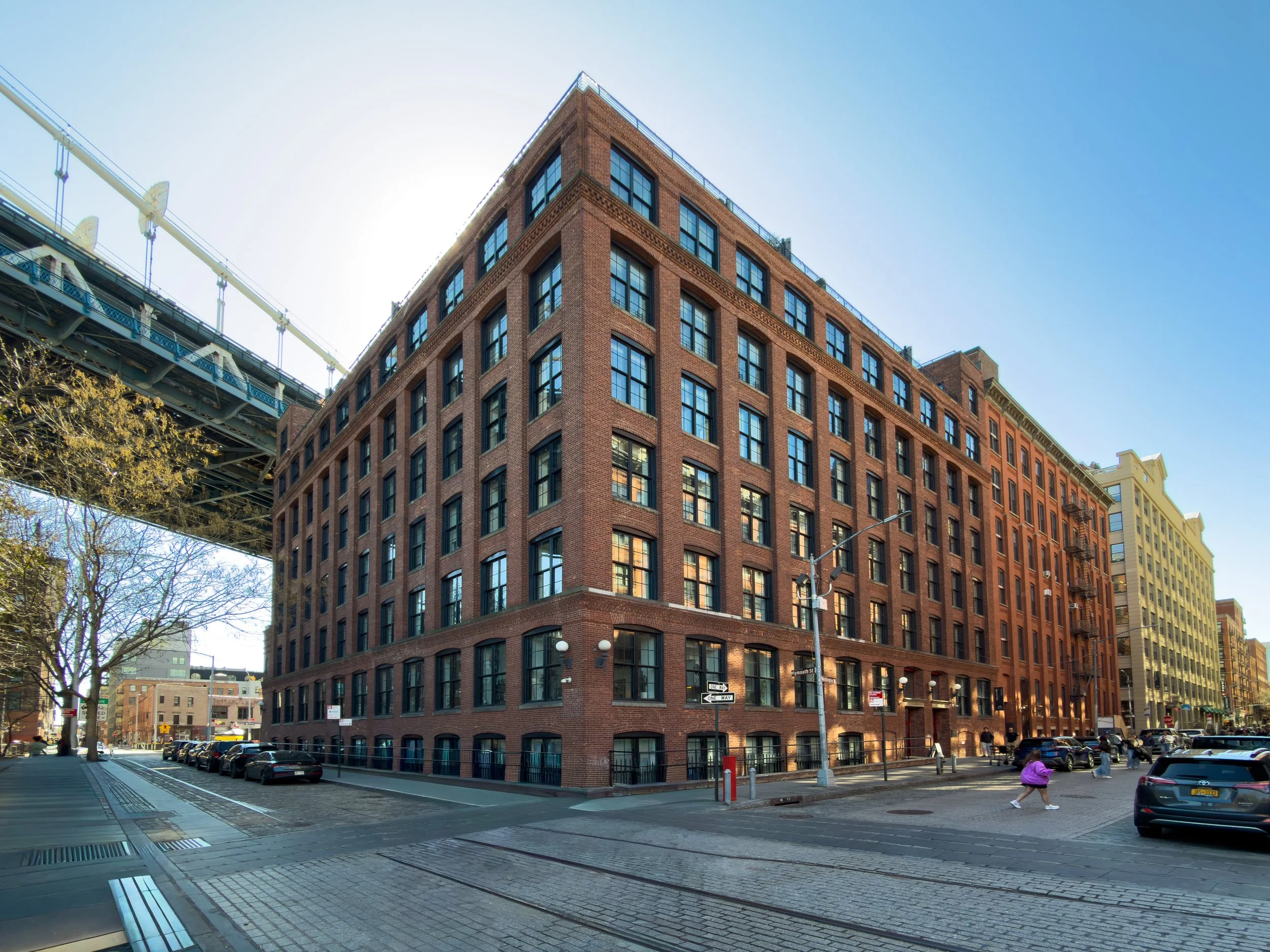
Large-scale brick and masonry structures, often featuring high ceilings, oversized windows, and open floor plans, define much of the area’s architectural character. These former warehouses have been transformed into loft-style residences, giving the neighborhood a distinct physical identity that differs from the brownstone fabric seen across much of brownstone Brooklyn. Newer development has largely followed this industrial vocabulary, incorporating modern materials while maintaining scale and alignment with the existing built environment.
Geographically, DUMBO sits between the Manhattan Bridge to the north and the Brooklyn Bridge to the south, with the East River forming its western edge. Its position creates a contained, highly legible neighborhood footprint, where residential buildings, public spaces, and commercial corridors exist in close proximity. The result is a housing environment defined by architectural consistency, limited expansion potential, and a strong connection to the waterfront.
Vibe and Atmosphere
DUMBO has a distinctly composed feel shaped by its industrial scale and waterfront setting. The combination of wide cobblestone streets, repurposed warehouse buildings, and direct riverfront views creates moments of openness, while the presence of the Manhattan Bridge and large-format structures can make certain blocks feel more enclosed and vertical. Light moves differently here—reflected off the water, filtered through oversized windows, and framed by the structural lines of the bridges overhead.
The neighborhood operates with a noticeable variation in activity. Foot traffic concentrates heavily along the waterfront and key access points, particularly during peak hours, while interior blocks can feel quieter in the early morning or later in the evening. This contrast between high-traffic corridors and more contained residential pockets is a defining part of the neighborhood’s rhythm.
DUMBO’s identity as an arts district remains embedded in its physical and cultural fabric. A cluster of more than 30 galleries and creative institutions—including Klompching Gallery, A.I.R. Gallery, Smack Mellon, and POWERHOUSE Arena—contributes to the neighborhood’s character, reinforcing its longstanding connection to artists and creative industries. These spaces are integrated into the streetscape rather than isolated, adding to the sense that art and design are part of the area’s daily rhythm rather than a separate destination layer.
Public space plays a significant role in shaping how the neighborhood is experienced. Fulton Ferry Landing and the adjacent sections of Brooklyn Bridge Park anchor the waterfront, offering open green space, pedestrian pathways, and direct views of Lower Manhattan. The park extends south along the river with a series of piers that support recreation, walking routes, and everyday outdoor use, effectively expanding the neighborhood beyond its original industrial grid.
While DUMBO itself is compact, nearby amenities in Brooklyn Heights and Downtown Brooklyn—including access to the Borough Hall Greenmarket—add another layer of convenience within walking distance.
Amenities and Conveniences
Daily life in DUMBO is supported by a compact but well-developed set of neighborhood conveniences, anchored by its waterfront access and a network of small-scale retail and service businesses. Brooklyn Bridge Park functions as a central amenity, extending along the East River with landscaped lawns, recreational areas, and walking paths that integrate directly into the neighborhood’s western edge. The park is not a separate destination—it operates as an extension of the residential environment, used for morning routines, exercise, and everyday outdoor access.
The neighborhood’s retail infrastructure is concentrated and efficient rather than expansive. Residents rely on a mix of local markets, specialty shops, and nearby access to larger commercial corridors in Brooklyn Heights and Downtown Brooklyn. This creates a system where daily needs are met within the neighborhood, while broader retail access remains within a short walking distance.
Coffee culture is a visible part of the neighborhood’s morning rhythm, with a number of small, independent operators embedded throughout the area. Spots like Butler, Almondine Bakery, Devoción, and Dawn’s Til Dusk function as consistent anchors, supporting early-day routines and informal meeting points. Smaller-scale locations such as the Red Coffee Stand and Fontainhas contribute to the neighborhood’s localized feel, reinforcing the idea that convenience in DUMBO is built around proximity and repetition rather than volume.
Empire Stores adds a different layer to the amenity mix, repurposing a historic warehouse into a multi-level retail and commercial space. While it introduces a broader set of offerings, its integration into the existing streetscape maintains continuity with the neighborhood’s industrial character.
Dining and Shopping
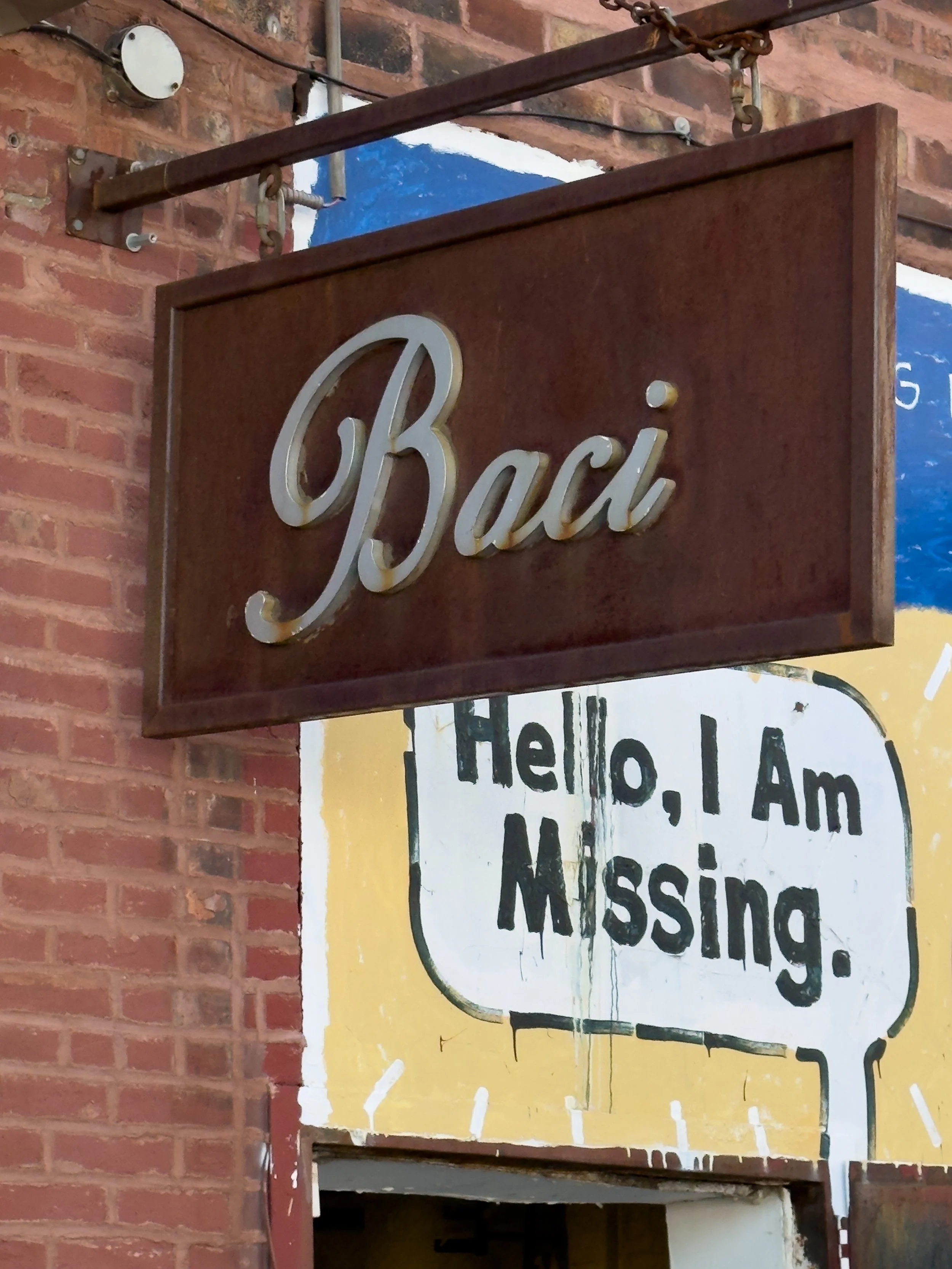
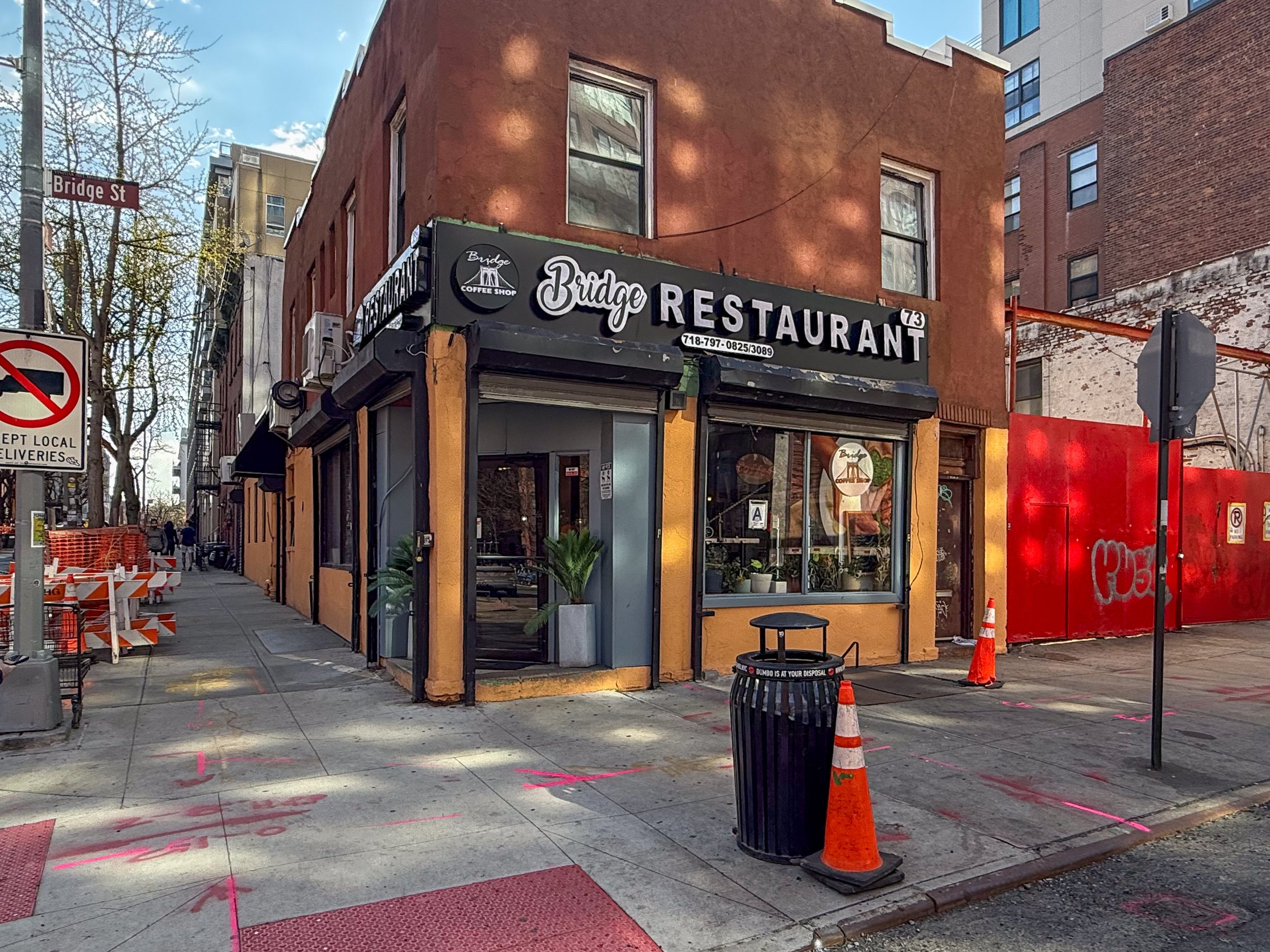
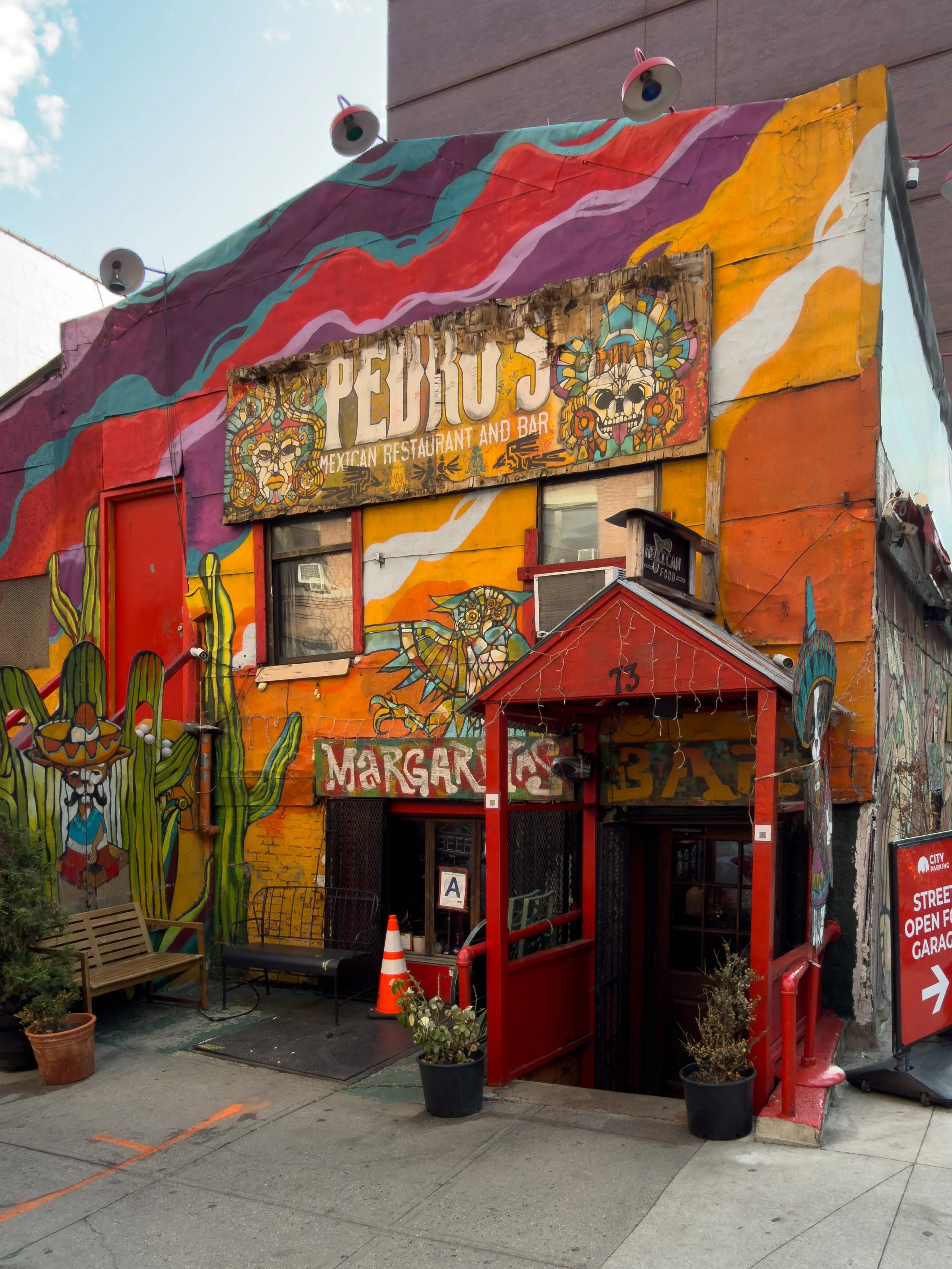
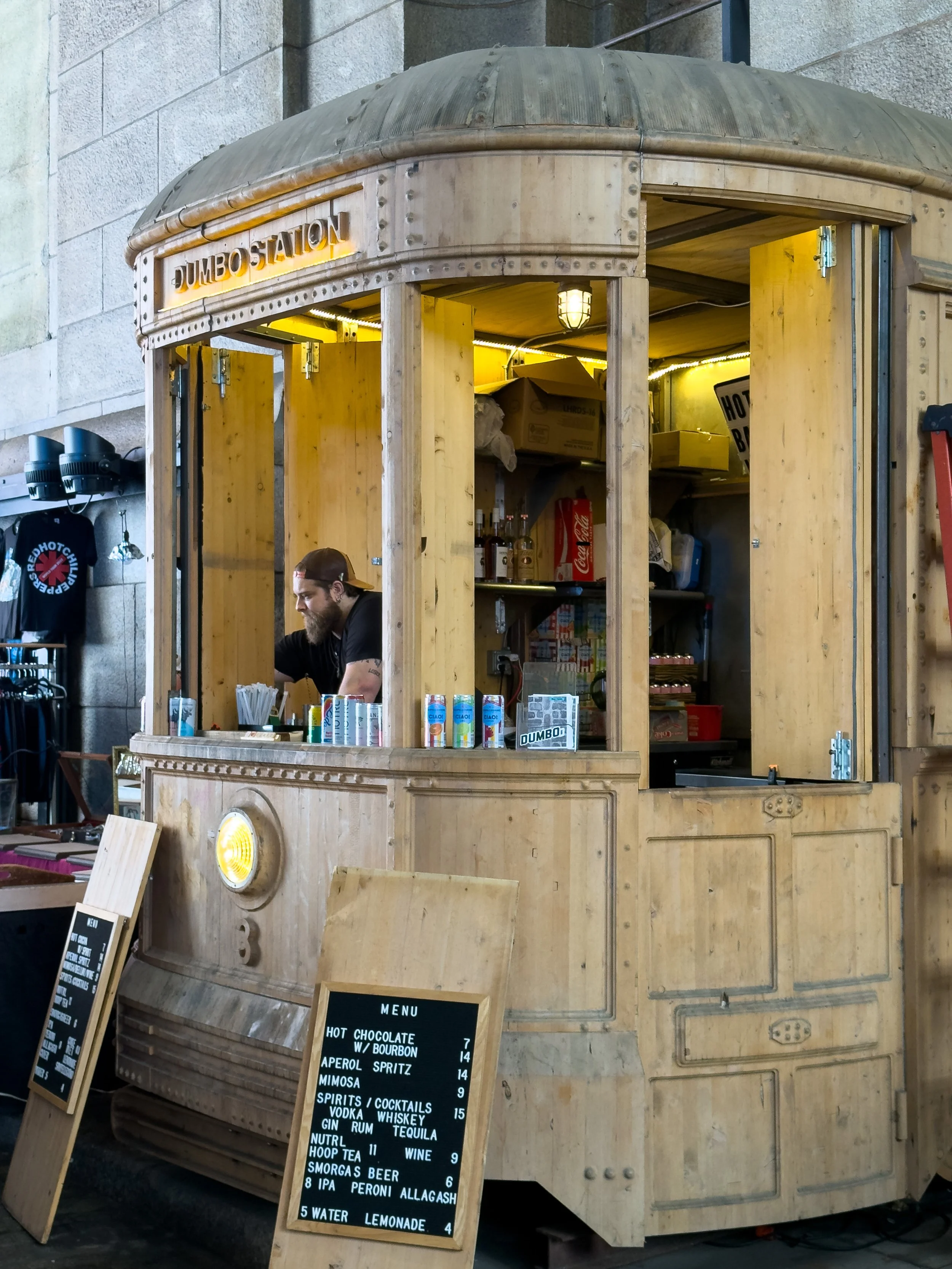
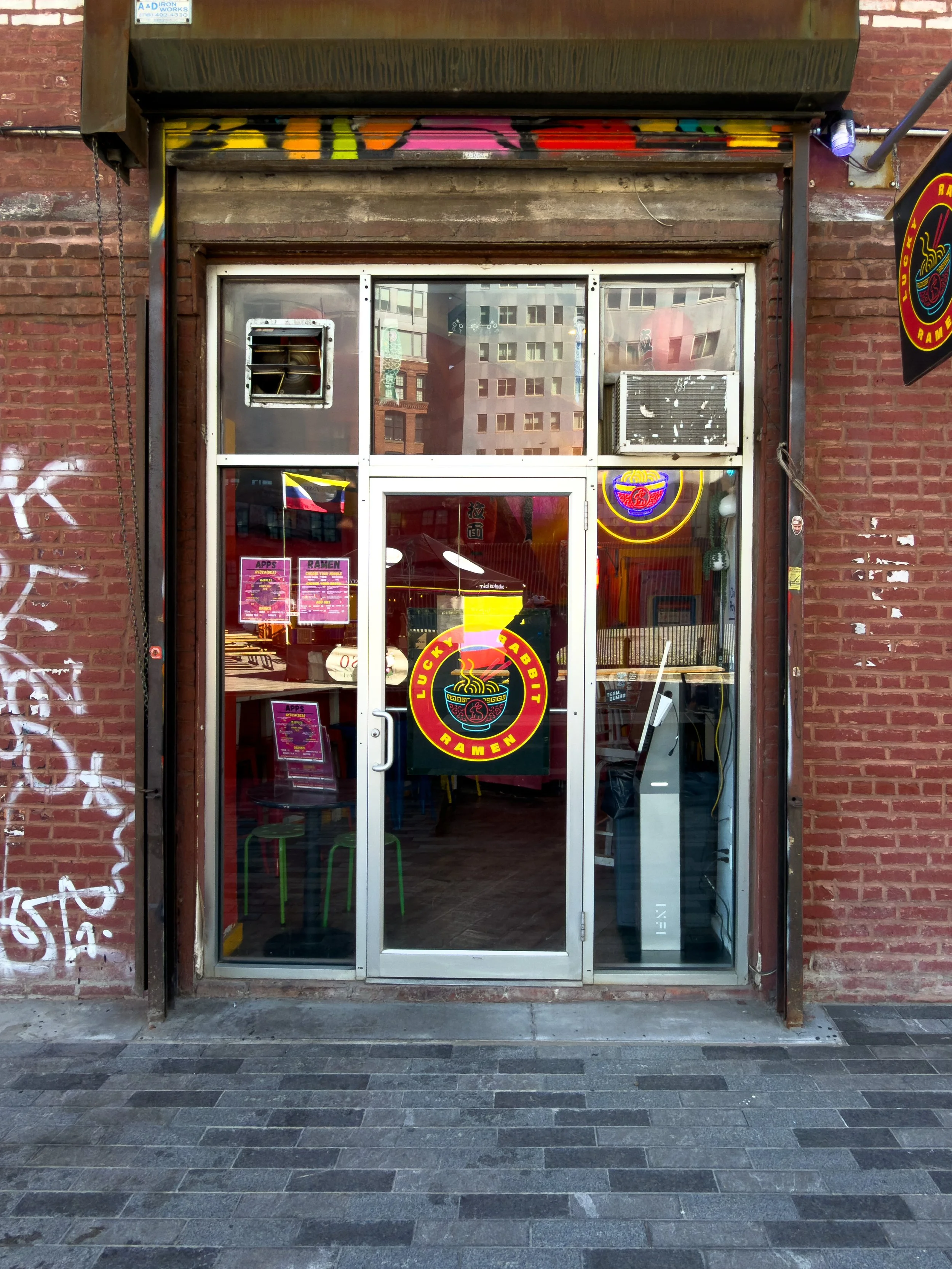
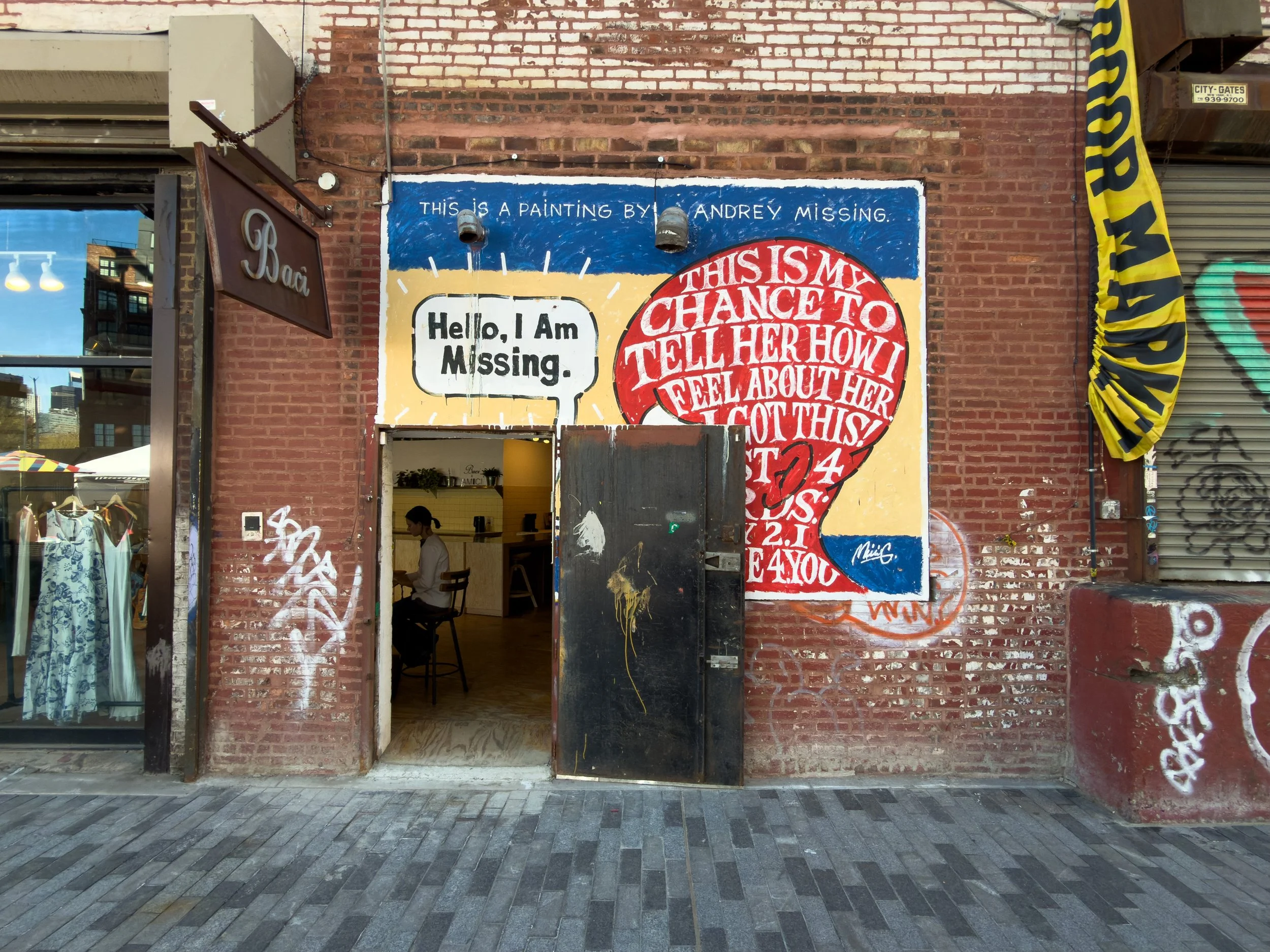
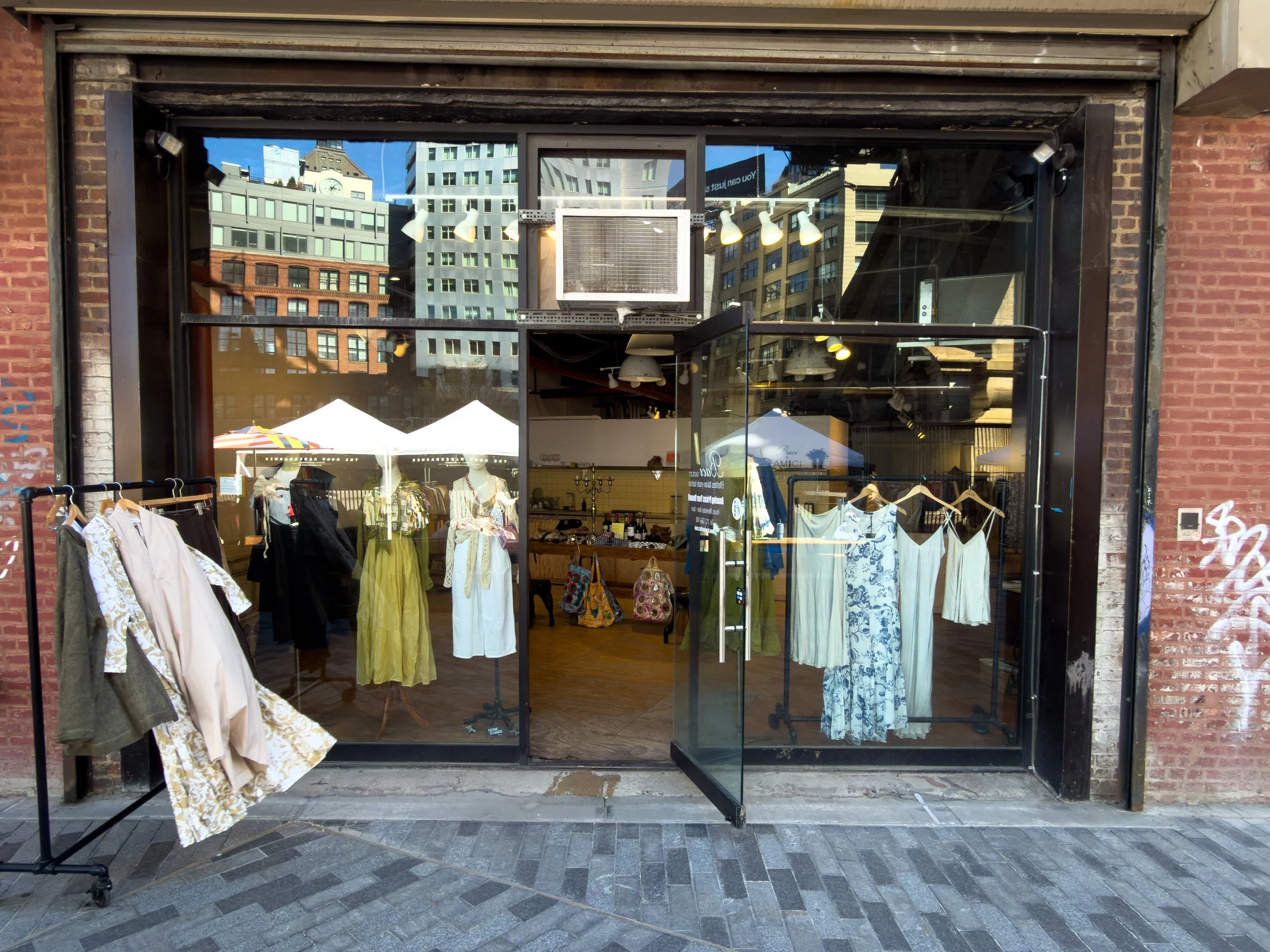
Dining and shopping in DUMBO are closely tied to the neighborhood’s daily patterns rather than operating as a standalone destination layer. Restaurants and retail are integrated into ground floors of converted buildings and along key corridors, creating a continuous but controlled commercial presence.
The dining landscape reflects a mix of established neighborhood staples and higher-end concepts, many of which take advantage of the area’s waterfront positioning. Time Out Market consolidates a wide range of vendors into a single location, while restaurants like Cecconi’s and Celestine offer more structured dining experiences with views and outdoor seating. Nearby, Cafe Gitane and Westville provide more casual options that align with day-to-day routines, while Vinegar Hill House—just outside the immediate core—adds a quieter, residential counterpoint.
Other spots, including Fornino, Felice Pasta Bar, and Clinton St. Baking Company, round out the dining mix, offering a range of formats that support both regular use and occasional dining. The overall pattern is less about volume and more about consistency, with restaurants embedded into the neighborhood rather than clustered into a single high-traffic corridor.
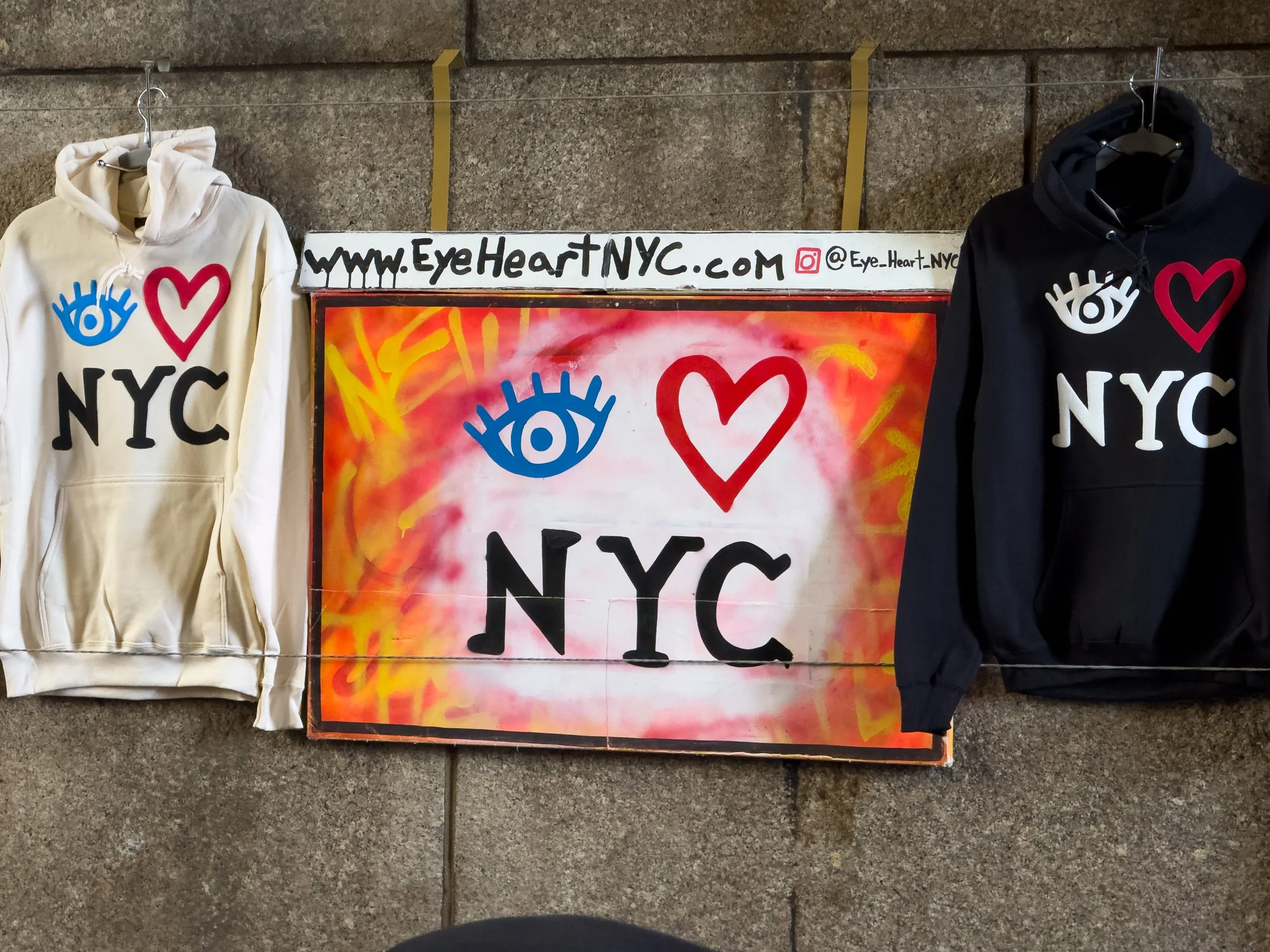
Retail follows a similar structure, emphasizing independent operators and curated spaces over large-format stores. The Brooklyn Flea and Archway vendors introduce a rotating marketplace element, while shops like Front General Store, Modern Anthology, and Usagi reflect a focus on design, craftsmanship, and small-scale production. Additional spaces such as 2nd STREET, L’Ensemble, and Thea Grant Jewelry contribute to a retail environment that is selective and specialized rather than comprehensive.
Empire Stores and Time Out Market provide larger retail footprints, but even these are integrated into the neighborhood’s industrial framework, maintaining alignment with its architectural and commercial identity.
Transportation
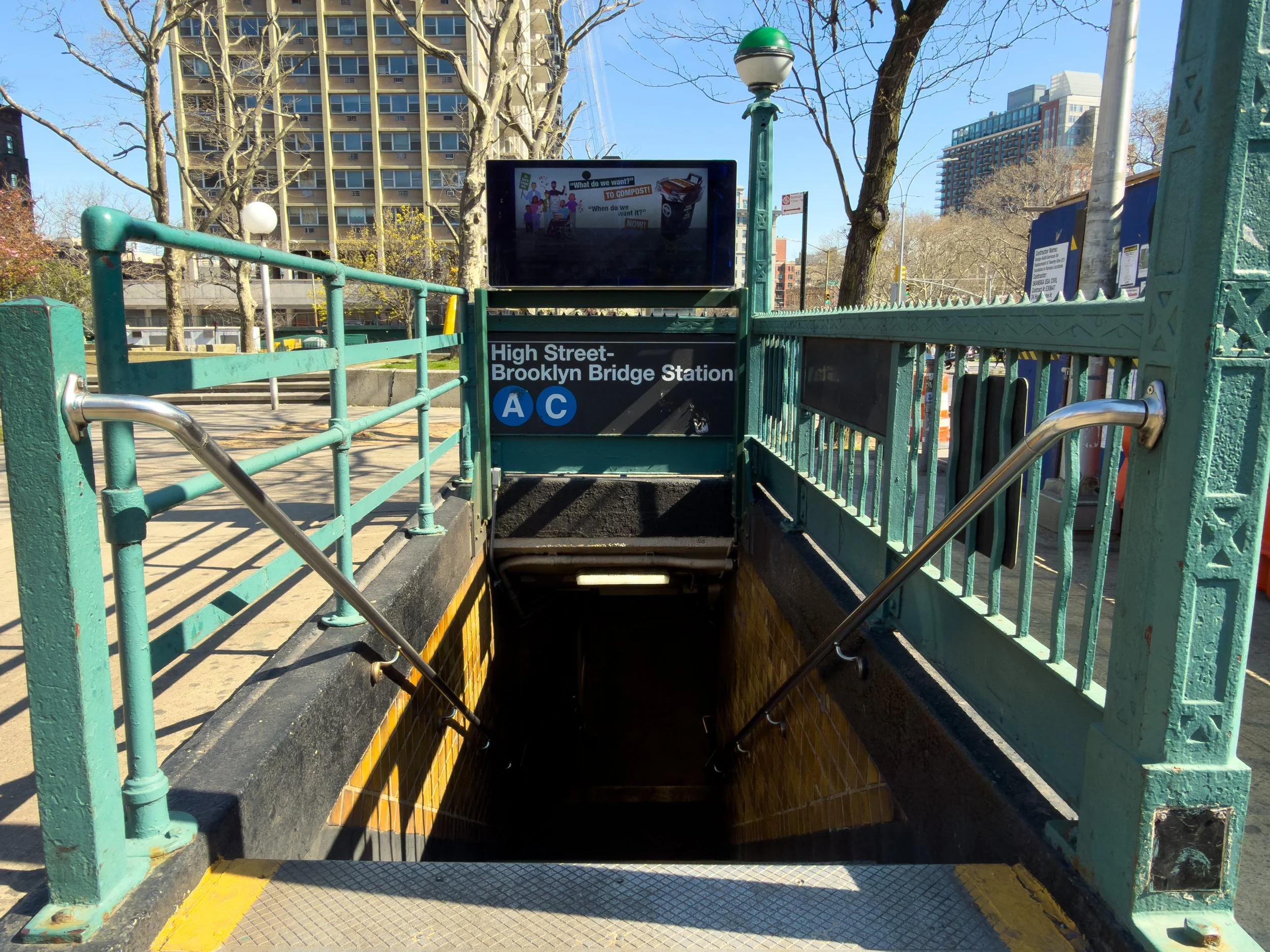
DUMBO is relatively well-connected given its location, though transit access is more limited compared to larger neighborhoods. The (F) train at York Street provides the primary subway connection within the neighborhood, while the (A) and (C) trains at High Street–Brooklyn Bridge, located just to the south in Brooklyn Heights, offer additional access within walking distance.
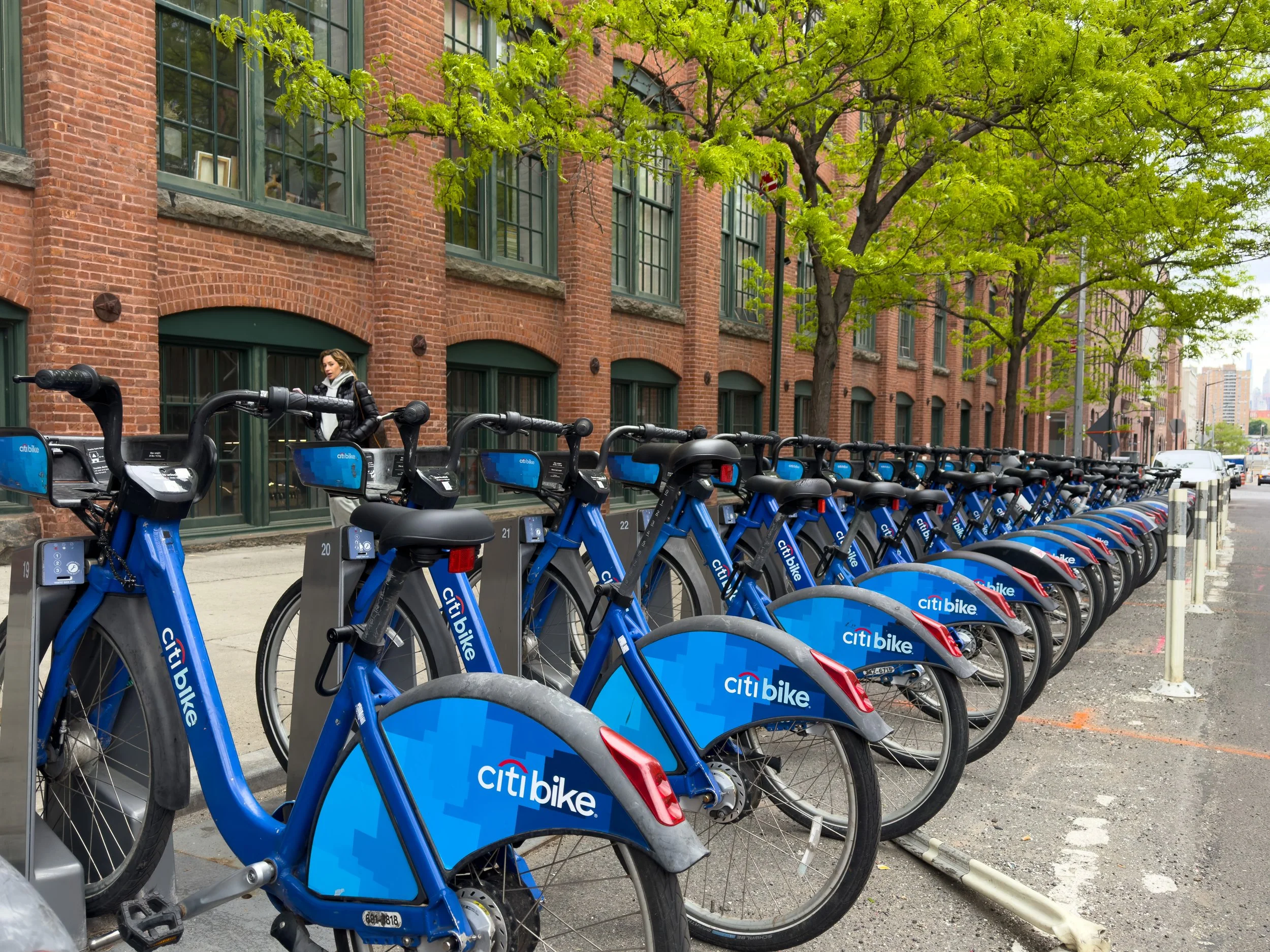
The NYC Ferry serves as a secondary transit option, with routes connecting DUMBO to Wall Street, Midtown, and other waterfront neighborhoods. Citi Bike stations are distributed throughout the area, supporting short-distance travel and connections to adjacent neighborhoods including Downtown Brooklyn, Brooklyn Heights, and Williamsburg.
Vehicular access is supported by proximity to the Brooklyn and Manhattan Bridges, allowing for relatively direct routes into Manhattan and other parts of Brooklyn. While the neighborhood itself is compact and highly walkable, its connectivity is shaped by a combination of subway access, ferry service, and bridge proximity.
Schools
DUMBO’s residential base is supported by access to a range of public, charter, and private school options, many of which are located in nearby neighborhoods rather than within the immediate footprint. Public schools in the surrounding areas of Brooklyn Heights and Downtown Brooklyn provide primary options for families, while several charter schools operate within a short distance.
Private school access is a notable component of the area’s broader educational landscape, with a number of well-regarded institutions located within a reasonable commute. The neighborhood’s proximity to Manhattan also expands access to additional private and specialized schools, as well as higher education institutions.
The overall structure reflects the neighborhood’s size and density, where educational access is defined less by in-neighborhood concentration and more by proximity to a wider network of schools.
Real Estate Insights
DUMBO’s housing market is defined by a limited and highly specific inventory base, shaped primarily by the conversion of former industrial buildings into residential use. Loft-style condominiums dominate much of the landscape, with large floor plates, open layouts, and architectural features that reflect the neighborhood’s manufacturing past. These characteristics create a distinct product type that is not easily replicated elsewhere in Brooklyn.
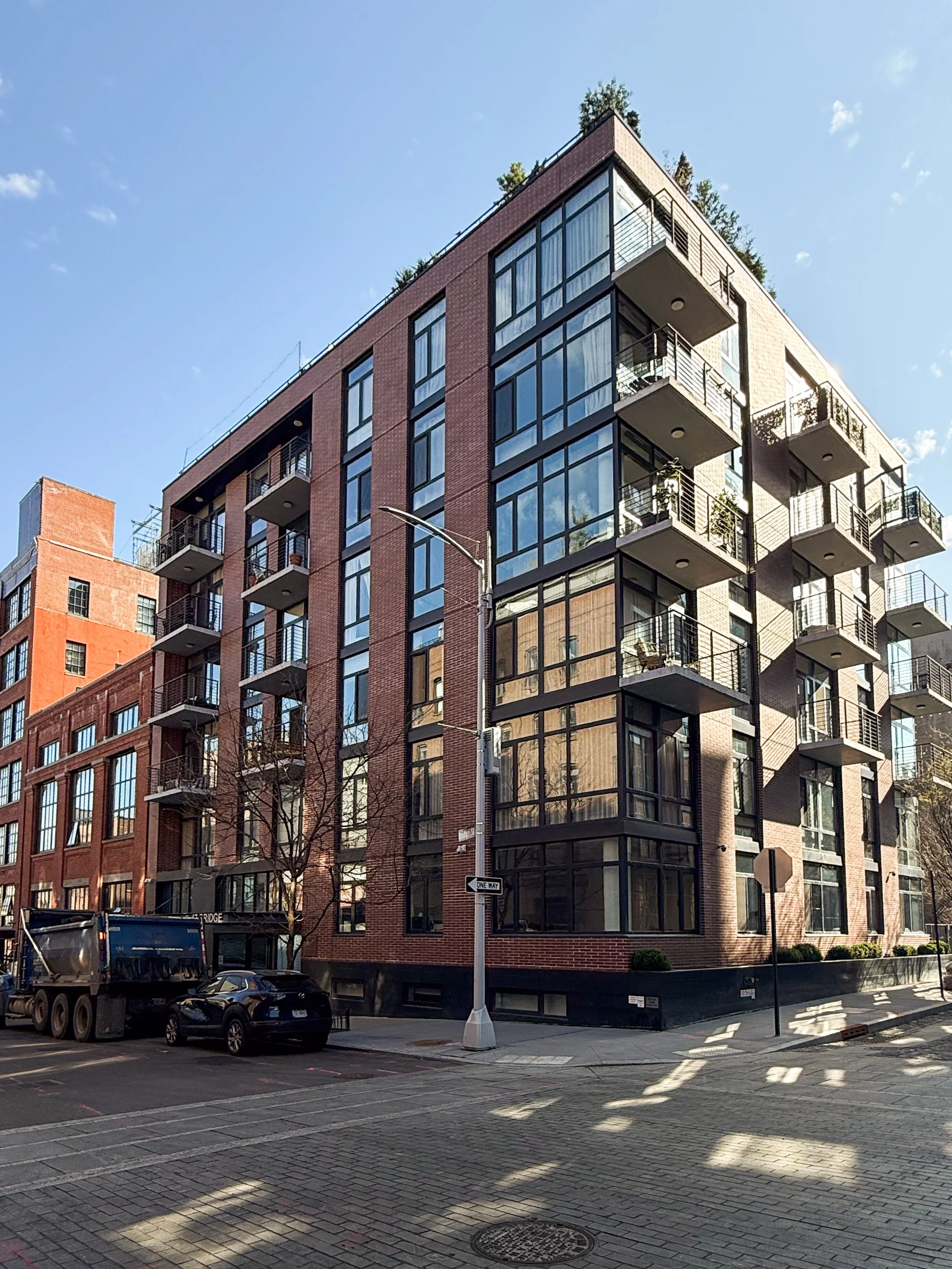
New development has been selective and constrained by both zoning and the existing built environment, resulting in a relatively small number of ground-up condominium projects that complement the loft inventory. As a result, the overall housing mix remains consistent, with a strong emphasis on high-end condominium ownership and a limited presence of traditional co-op structures.
The buyer profile in DUMBO tends to reflect this inventory, with demand concentrated among purchasers seeking larger-format residences, waterfront proximity, and a more contained neighborhood setting. The combination of architectural character, limited supply, and geographic constraints contributes to a market dynamic where availability remains relatively tight and turnover is lower than in more expansive neighborhoods.
Sales Market At A Glance (2026)
Typical home value (ZHVI): ~$1.77M (+1.9% YoY)
Median sale price (Q1 2026): ~$2.2M (+6.2% YoY)
Median price per square foot: ~$1,518 (−8.7% YoY)
Median list price: ~$1.93M (March 2026)
Inventory (Q1 2026): ~90 active listings
New listings (Q1 2026): ~21
Quarterly transactions (Q1 2026): 31 (+55% YoY)
Property type breakdown (Q1 2026): Condos: ~$2.1M median (primary market segment); Co-ops: minimal activity (limited presence)
Source: Zillow, PropertyShark, Realtor.com, and Redfin. ZHVI reflects seasonally adjusted home value estimates. Closed-sale metrics vary by methodology, property mix, and reporting period. Closed sales tend to skew toward larger, higher-end units, which can push median sale prices above blended value metrics.
Trends
Pricing in DUMBO continues to be shaped by its limited inventory base and highly specific product type. Median sale prices have trended upward year-over-year, reaching approximately $2.2M in early 2026, reinforcing the neighborhood’s position as a constrained, high-end submarket rather than a volume-driven one.
At the same time, the decline in price per square foot points to variability in the types of units trading. Larger-format lofts—which are common in DUMBO—can introduce fluctuations in $/ft depending on layout, ceiling height, and overall scale. As a result, headline pricing can rise even as per-square-foot figures soften.
Transaction activity has increased meaningfully, with a 55% year-over-year rise in closed sales in Q1. This suggests improved alignment between buyer expectations and seller pricing following a more constrained prior period. However, overall deal volume remains low in absolute terms, reinforcing the neighborhood’s limited turnover and small sample size.
The market remains overwhelmingly condominium-driven, with co-op activity representing a negligible share of transactions. This structural characteristic continues to shape both pricing and demand, with buyers primarily focused on larger, newer, or renovated units offering waterfront exposure and full-service amenities.
Overall, DUMBO functions as a supply-constrained, high-price submarket where pricing is influenced less by short-term market shifts and more by inventory availability, unit uniqueness, and sustained demand for waterfront, loft-style housing in close proximity to Manhattan.
Final Thoughts
DUMBO operates as a highly defined residential environment shaped by its industrial origins, waterfront positioning, and constrained physical footprint. The neighborhood’s housing stock, public space integration, and commercial infrastructure closely aligned, creating a cohesive system rather than a collection of disconnected elements.
Its scale and structure contribute to a market dynamic where inventory remains limited and the overall character of the neighborhood changes slowly over time. Rather than evolving through large-scale redevelopment, DUMBO’s trajectory has been shaped by incremental adaptation within an established framework.
For buyers and owners, the neighborhood is best understood through this lens—where architectural identity, supply constraints, and location along the East River collectively influence how the market behaves and how the area continues to develop.
Thinking of buying or selling in DUMBO? Get tailored insights into the local market or request a complimentary CMA. Reach out — let’s start the conversation.
For more NYC real estate guides, visit the Resources & Insights hub for tips designed to help buyers and sellers navigate the DUMBO real estate market.
Related Brooklyn Neighborhood Guides