Fort Greene, Brooklyn
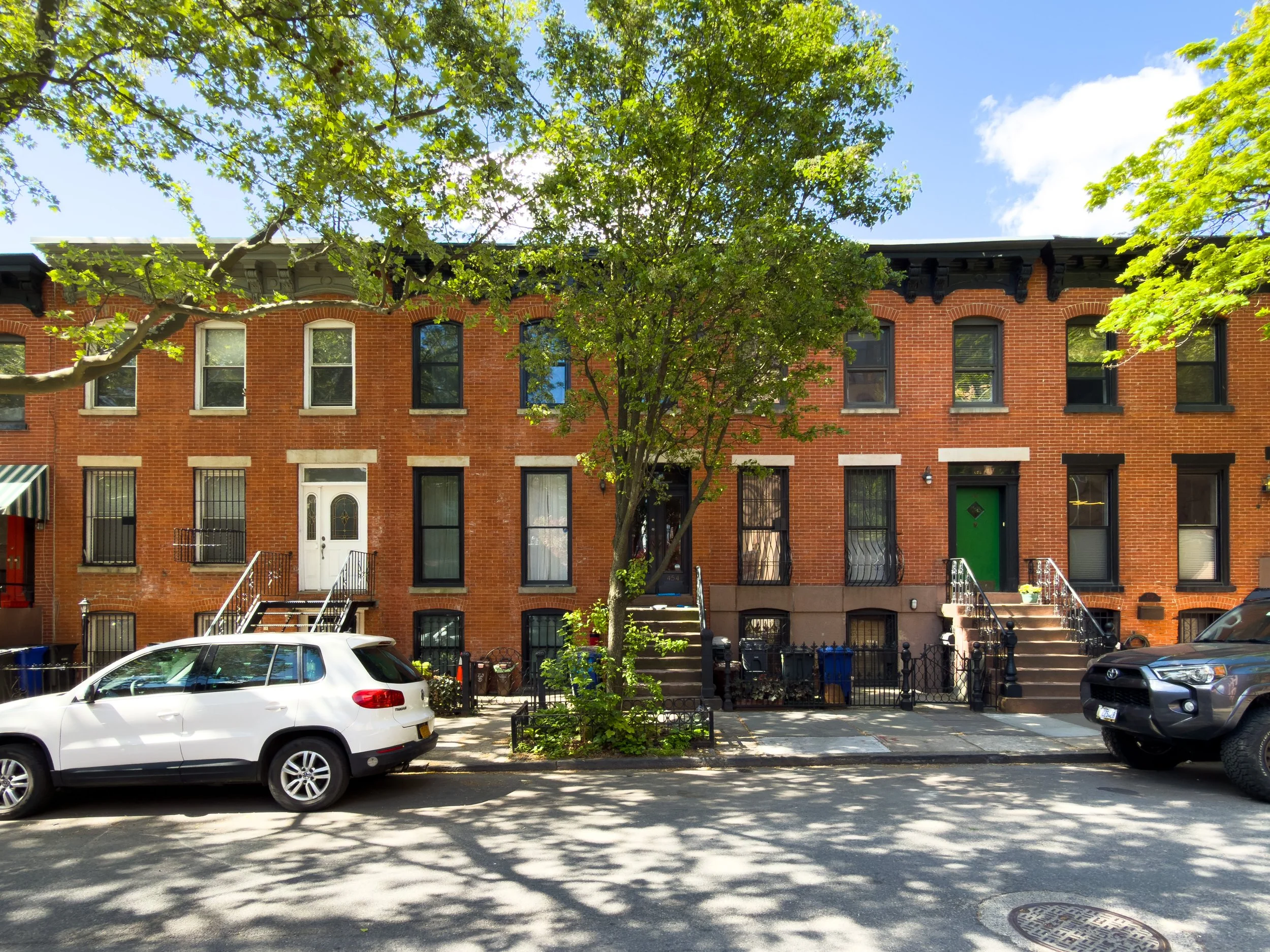
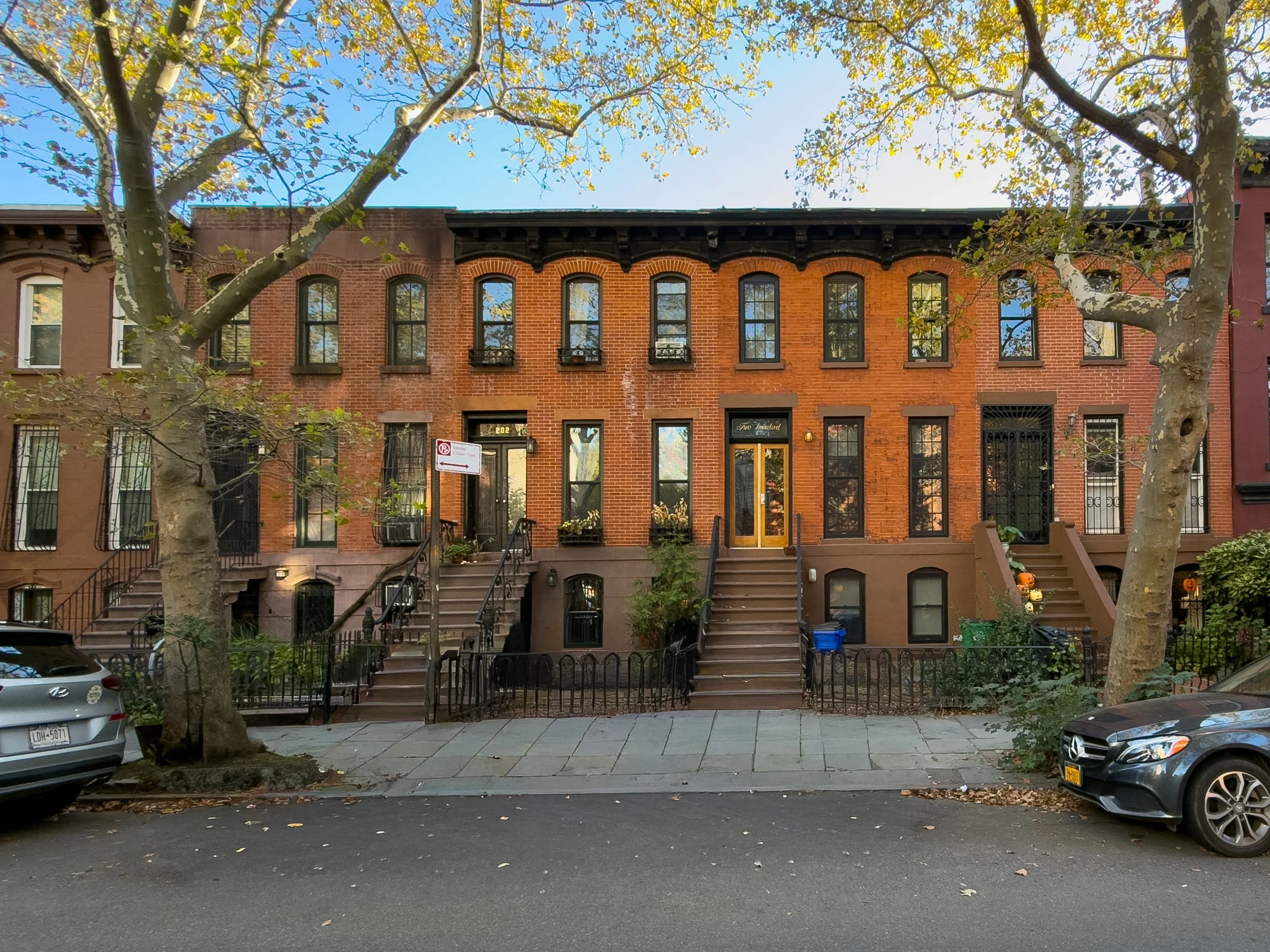
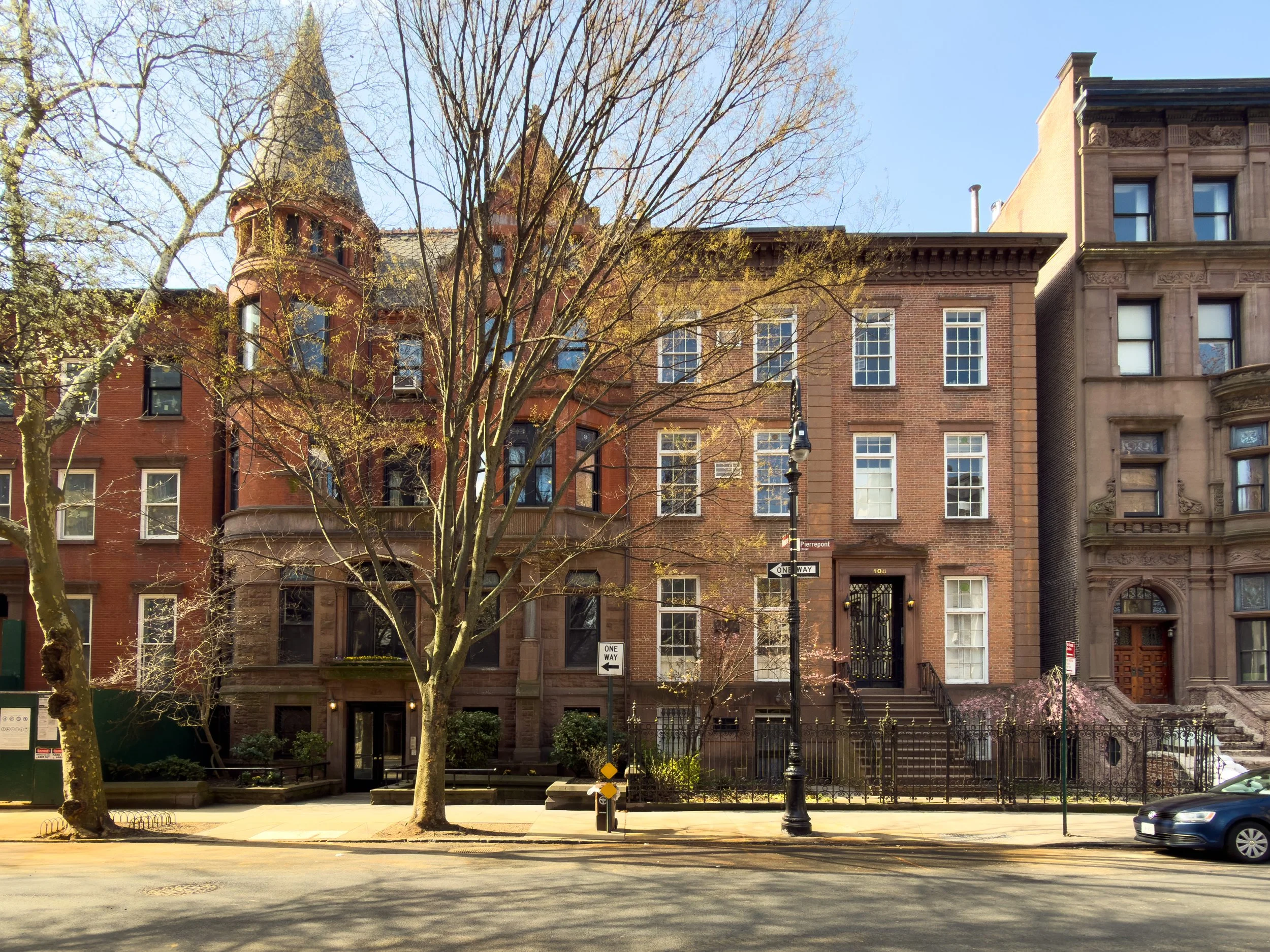
Fort Greene is where Brooklyn’s past and present harmonize—nestled brownstones, bustling local life, and cultural institutions create a deeply rooted, warmly inspiring place. Timeless, alive, and invitingly grounded to call home.
Fort Greene
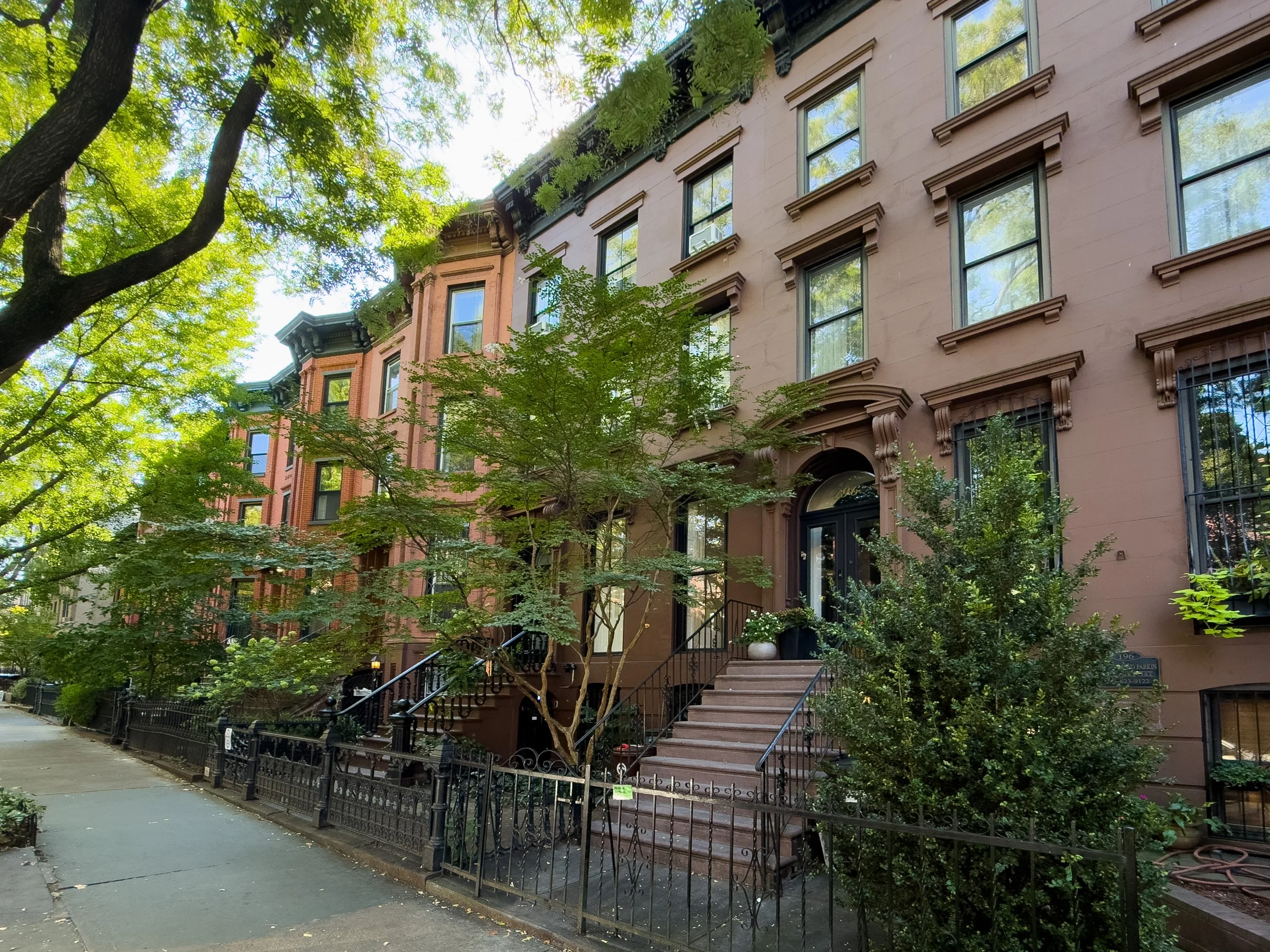
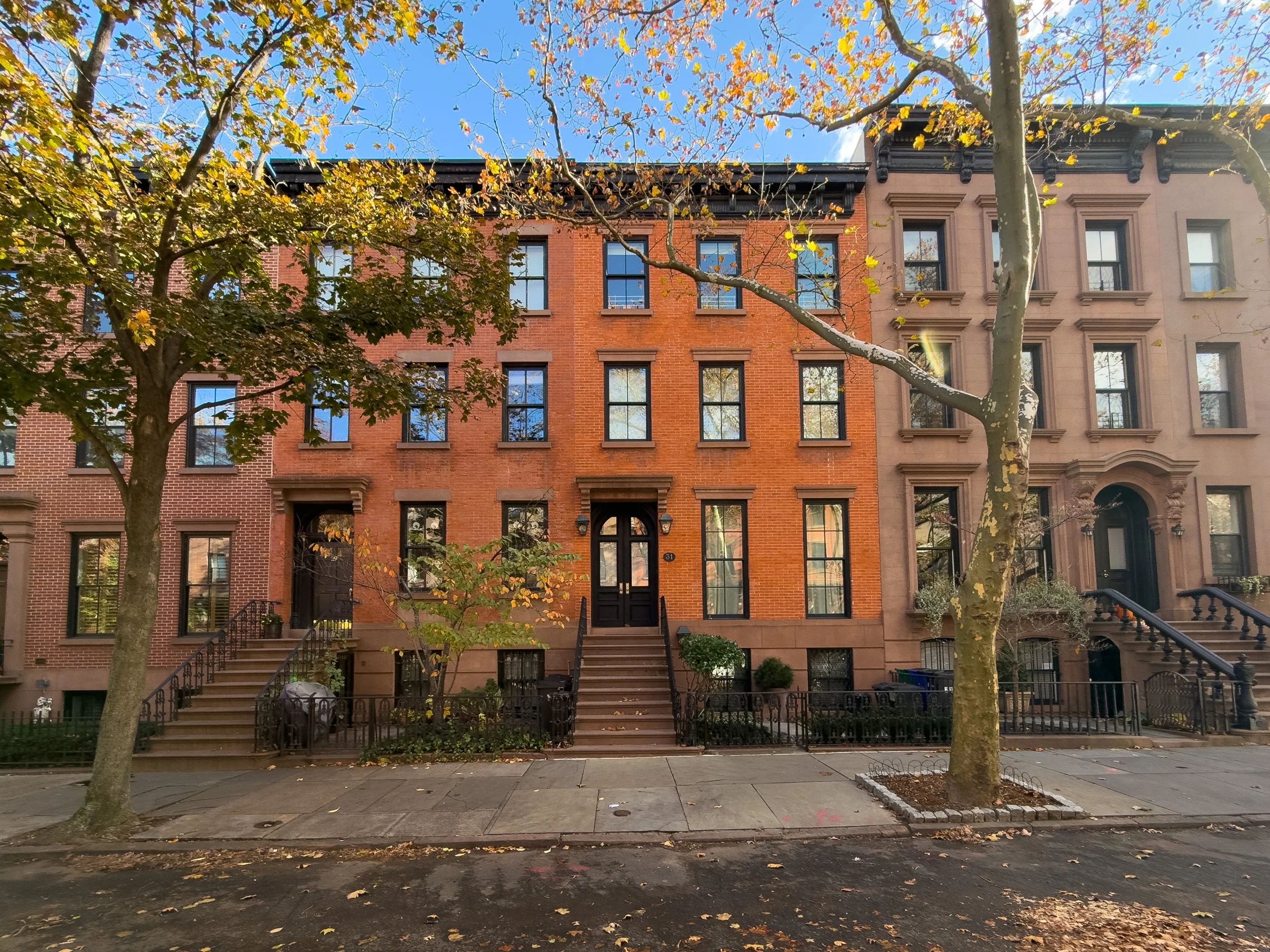
1. Neighborhood: Historic Brooklyn neighborhood anchored by Fort Greene Park, defined by classic brownstones, tree-lined residential streets, and a measured transition toward higher-density corridors along its edges.
2. Conveniences: Daily infrastructure lines Fulton Street, Myrtle Avenue, and DeKalb Avenue to the west, with park access, greenmarket vendors, local shops, and neighborhood services all within a short walk.
3. Transit: Subway and regional access via Atlantic Terminal–Barclays Center, along with the A, C, and G trains, connecting residents efficiently to Manhattan and across Brooklyn.
4. Real Estate: Constrained inventory, brownstones and townhouses, with boutique condos and select larger developments near Downtown Brooklyn and Atlantic Ave., expanding housing options while preserving the residential core.
The Vibe at a Glance
Fort Greene moves at a measured pace. The neighborhood is anchored by Fort Greene Park and a network of intact brownstone blocks that give it architectural continuity and a steady daily rhythm. Early weekend mornings belong to residents stopping at neighborhood cafés before the Fort Greene Greenmarket and Artisans Bazaar bring added energy to the park’s edges. Cultural institutions anchored by the Brooklyn Academy of Music and active dining corridors introduce movement later in the day, while interior streets remain distinctly residential. For buyers and owners, that balance between historic housing stock and proximity to Brooklyn’s cultural core supports both everyday livability and long-term property value. Thinking of buying or selling in Fort Greene? Get tailored insights into the local market—let’s start the conversation.
Fort Greene, Brooklyn 11205
Neighborhood
North to South: Flushing Ave. & to Atlantic Ave.
East to West Flatbush Ave. to Clermont Ave.
Nearby Neighborhoods: Clinton Hill, Prospect Heights, Boerum Hill, Downtown
MTA Lines
(2) (3) (4) (5)(A) (C) (B)(D) (G) (N)(G) (R)
Local Commute Times
Financial District: 25m train, 15m car
Long Island City: 32m train, 23m car
Union Square: 35m train, 23m car
Grand Central: 40m train, 25m car
Fort Greene
Fort Greene occupies a distinctive position in Brooklyn’s residential landscape. Anchored by Fort Greene Park and framed by landmarked brownstones, the neighborhood combines 19th-century townhouses, prewar apartment buildings, and smaller-scale condominium developments within a compact, walkable footprint. Its proximity to Downtown Brooklyn and the BAM Cultural District introduces a layer of density and newer construction along its western edge, while interior streets retain a cohesive, historic character.
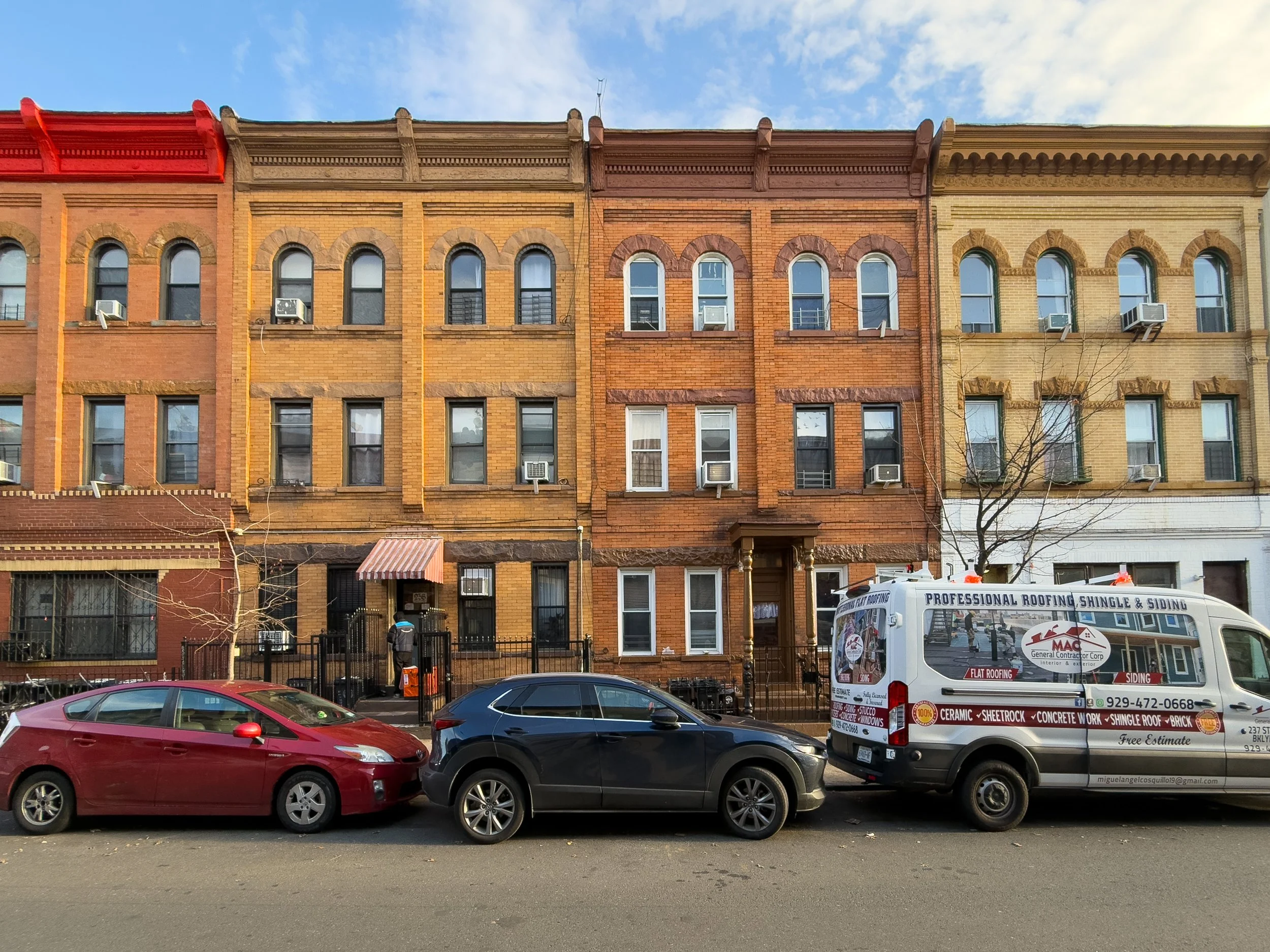
Housing types range from preserved single-family brownstones and multi-family townhouses to prewar co-ops and low-rise boutique condominiums built over the past two decades. Near Atlantic Terminal and Lafayette Avenue, larger mixed-use developments introduce amenity-rich full-service condominiums without fully reshaping the eastern residential grid. The result is a neighborhood where architectural integrity remains dominant, but selective development expands options for buyers seeking modern layouts within an established historic setting.
Vibe and Atmosphere
Fort Greene is shaped first by its park. Fort Greene Park functions as both a physical and social anchor — a daily meeting ground for neighbors, a backdrop for seasonal events, and a defining visual presence from many surrounding blocks. The park’s elevated paths and mature trees create a sense of enclosure that reinforces the neighborhood’s scale.
Mornings feel local and unhurried. Residents walk dogs along South Portland Avenue, grab coffee near Fulton or DeKalb, or pass through the park before commuting. Despite its proximity to Downtown Brooklyn, Fort Greene maintains a pace that is measured rather than hurried.
Culturally, the neighborhood carries institutional weight. The Brooklyn Academy of Music and the surrounding BAM Cultural District introduce theaters, performance venues, and public programming that attract visitors from across the city. Yet this activity tends to concentrate along Lafayette Avenue and near Atlantic Terminal, allowing interior brownstone blocks to remain quiet and residential.
Compared to Clinton Hill to the east, Fort Greene feels slightly more compact and park-oriented. Compared to Downtown Brooklyn to the west, it feels markedly more intimate and architecturally cohesive. That contrast is part of its enduring appeal.


Amenities and Conveniences
Fort Greene’s daily life revolves around proximity. Fulton Street, Myrtle Avenue, and DeKalb Avenue form the neighborhood’s commercial framework, offering grocery stores, pharmacies, specialty food shops, wine boutiques, and essential services within a short walk of most residences.
Fort Greene Park remains the primary anchor. In addition to its open lawns and tree-lined paths, the park hosts the Fort Greene Park Greenmarket, where vendors provide regional produce, baked goods, meats, and seafood each week. Along the park’s DeKalb Avenue edge, the Fort Greene Park Artisans Bazaar runs concurrently, featuring independent makers and small-scale local retailers that extend the park’s community presence into the surrounding blocks.
Beyond the park itself, a network of smaller green spaces reinforces the neighborhood’s family infrastructure. Albert J. Parham Playground, Edmonds Playground, Commodore Barry Park, and Oxport Playground provide additional playgrounds, courts, and open areas distributed throughout the neighborhood, softening the density of surrounding blocks.
At the southern edge along Atlantic Avenue, residents are within easy reach of Grand Army Plaza and Prospect Park, extending recreational access beyond neighborhood borders. To the west, the Atlantic Avenue and Flatbush corridors connect quickly to Downtown Brooklyn’s larger retail and civic amenities without altering Fort Greene’s residential character.
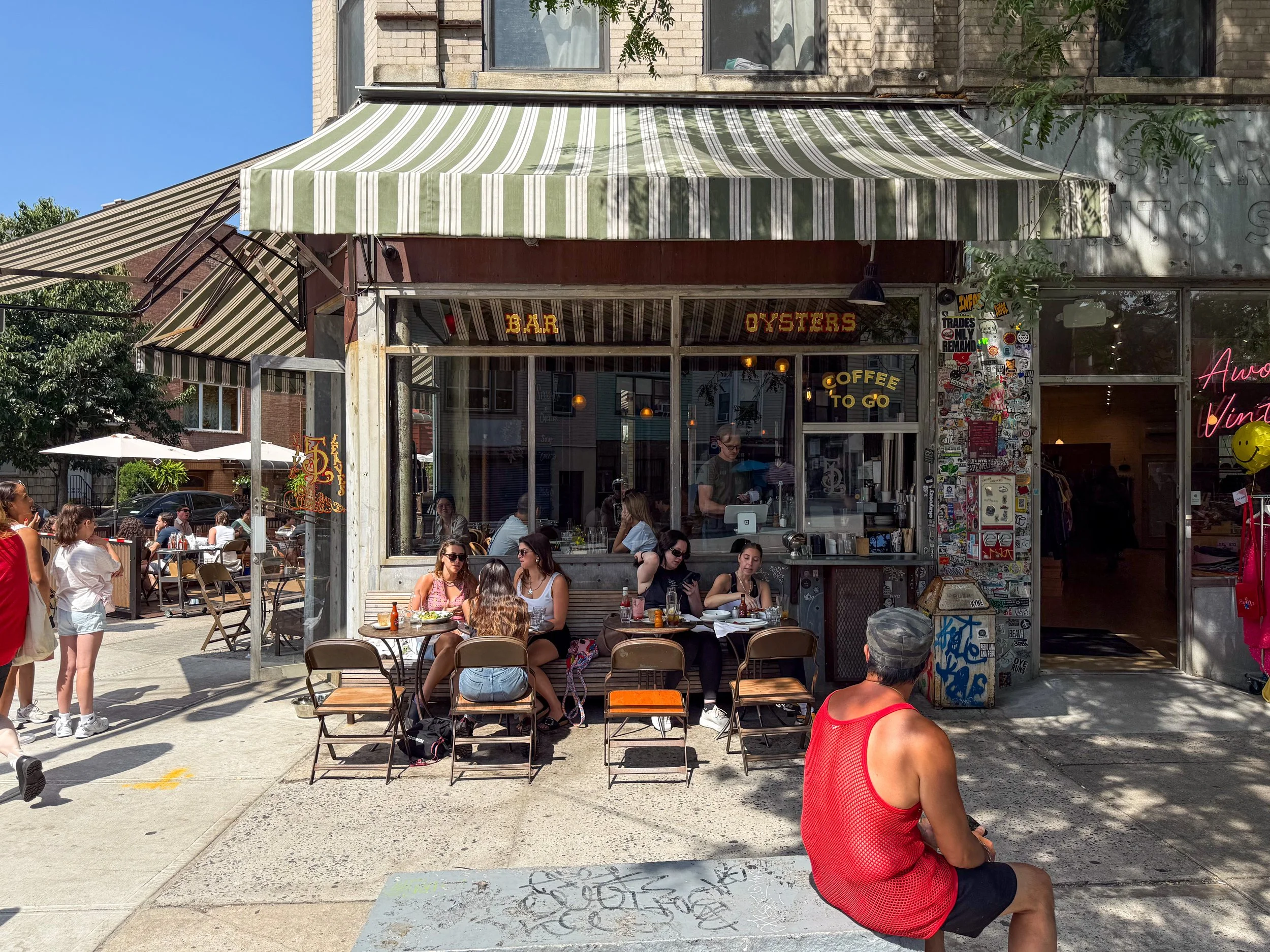
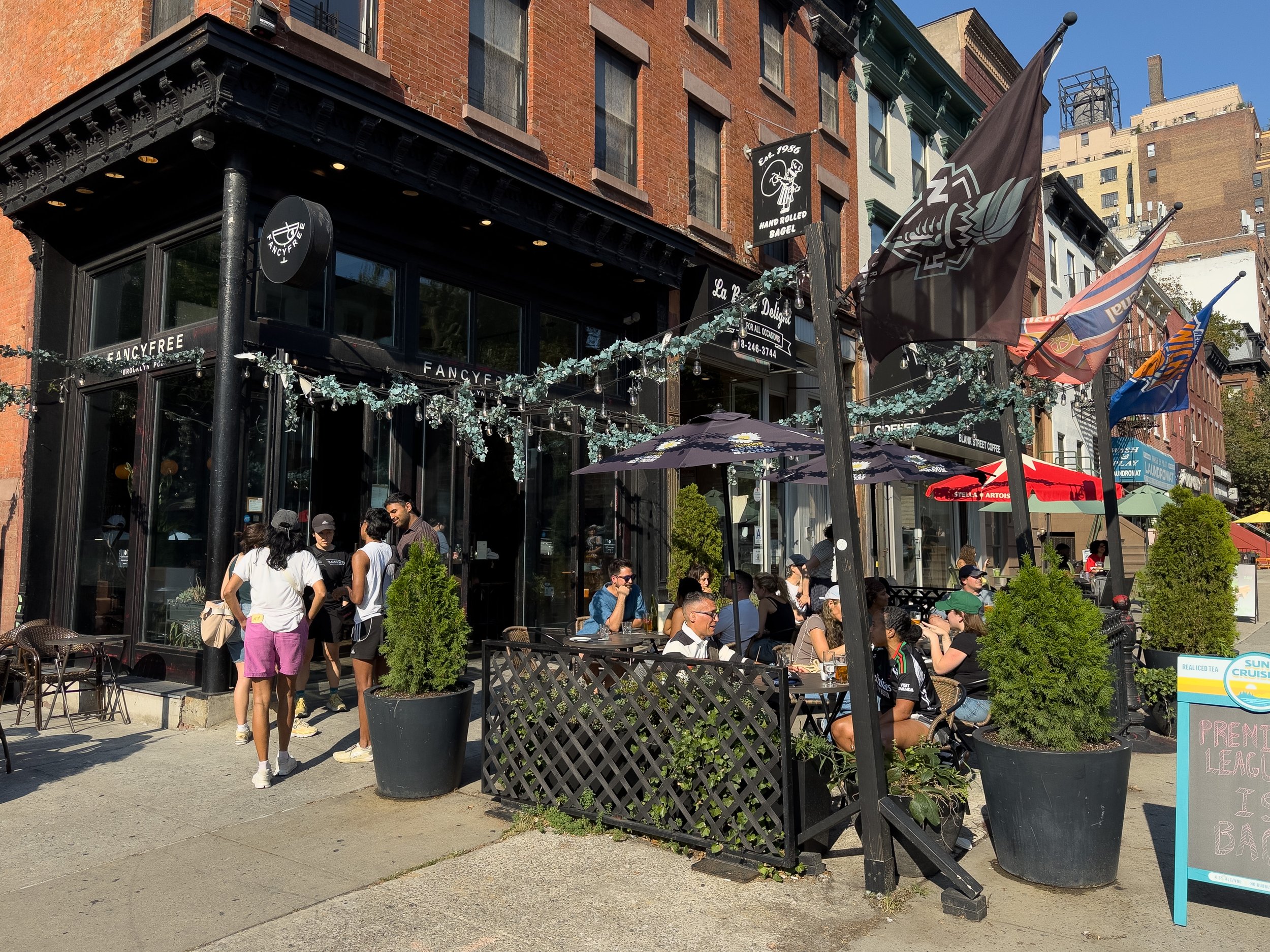
Coffee functions as neighborhood infrastructure rather than destination culture. Spots such as The Center for Fiction Café & Bar, Moka & Co, Bittersweet, Kofee, Hungry Ghost, Coffee Project, Blank Street, Compilation Coffee Roasters, and La Bicyclette Bakery support daily routines, remote work, and casual meetings without dominating the streetscape.
Playgrounds, basketball courts, and dog runs within and around Fort Greene Park reinforce the neighborhood’s lived-in quality, while nearby gyms and boutique fitness studios round out the everyday mix.


Dining and Shopping
Fort Greene’s dining scene is dense but integrated. Restaurants line DeKalb, Myrtle, and Fulton without forming a single entertainment corridor. Established favorites such as Walter’s, Olea, Miss Ada, Evelina, and Graziella coexist with additions like Black Iris, Fradei, Theodora, SUKH, and Strange Delight, reflecting a range of Mediterranean, Middle Eastern, Italian, and contemporary American influences.
Glin Thai Bistro and Fat Rabbit offer approachable neighborhood staples, while Dinner Party sits along the Clinton Hill border, drawing a steady local following. Rather than feeling nightlife-driven, the dining scene supports repeat visits — weeknight dinners, small gatherings, and reliable standby spots that become part of household routine. The result is variety without volatility. Fort Greene’s restaurants tend to embed themselves into daily life rather than cycling rapidly with trend shifts.
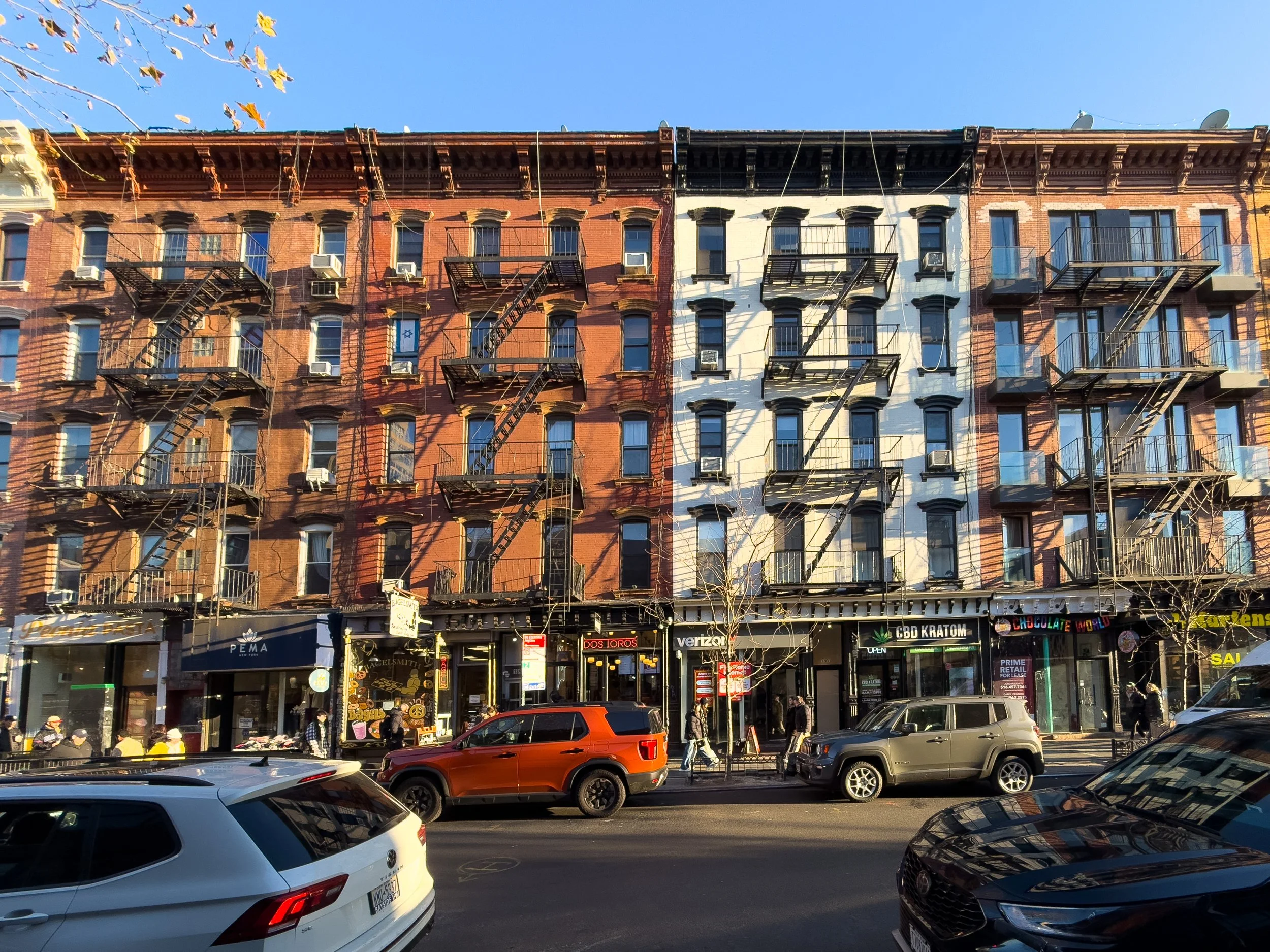
Retail in Fort Greene mirrors its residential scale. Fulton Street and Myrtle Avenue form the neighborhood’s primary commercial corridors, lined with independent boutiques, service-oriented storefronts, specialty shops, and everyday conveniences. Smaller side streets remain quieter, reinforcing the area’s walkable, neighborhood-oriented character. Rather than functioning as a regional shopping destination, Fort Greene’s retail landscape supports continuity — small businesses serving repeat customers within walking distance of home.
To the west, Downtown Brooklyn introduces a broader retail environment along Atlantic Avenue and Flatbush Avenue, including larger-format stores and national brands. That proximity expands shopping access without shifting Fort Greene’s interior blocks away from their smaller-scale, residential feel.
Transportation
Fort Greene benefits from exceptional transit connectivity. Atlantic Terminal–Barclays Center anchors the western edge, offering access to the (2), (3), (4), (5), (B), (D), (N), (Q), and (R) trains, as well as the Long Island Rail Road. Within the neighborhood, the (G) line at Fulton Street and nearby Clinton–Washington Avenues (in Clinton Hill), along with the (A) and (C) trains at Lafayette Avenue to the south, provide additional flexibility.
Cyclists use bike lanes along DeKalb and Lafayette Avenues, with Citi Bike stations distributed throughout the area. Drivers have relatively quick access to the Manhattan Bridge, Brooklyn Bridge, and the BQE, though street parking can be limited. This level of connectivity allows residents to maintain a quieter residential environment while remaining tightly linked to Manhattan and other parts of Brooklyn.
Schools
Fort Greene offers a range of public and charter options within walking distance for many families. Local public schools include PS 20 Clinton Hill, PS 46 Edward C. Blum, and Fort Greene Preparatory Academy. Brooklyn Technical High School, one of New York City’s specialized high schools, sits just outside the neighborhood. Charter options such as Brooklyn Prospect Charter School and Community Roots Charter School, along with private institutions like Greene Hill School, broaden educational choices. Higher education anchors nearby include Pratt Institute in neighboring Clinton Hill and Long Island University’s Brooklyn campus, both contributing academic presence without reshaping the neighborhood into a student enclave.
Real Estate Insights
Fort Greene’s housing market is defined by scarcity and architectural continuity. Landmark brownstones anchor the neighborhood, many preserved as single-family residences or configured as multi-unit townhouses. These properties trade infrequently and command premium pricing, particularly on park-adjacent and interior residential blocks. Prewar co-ops and smaller condominium conversions provide alternative entry points, often appealing to buyers seeking historic detail and smaller building scale. Over the past two decades, boutique condominium developments — typically low-rise buildings along Myrtle, Fulton, and DeKalb — have introduced modern layouts while maintaining neighborhood proportions.
Closer to Atlantic Terminal and the BAM Cultural District, larger amenity-driven developments such as The Ashland and 300 Ashland expand the housing spectrum with elevator buildings, doormen, and shared amenities. These properties create a distinct western sub-market that behaves differently from interior brownstone blocks in both pricing and turnover.
Inventory remains constrained relative to demand, and pricing can vary meaningfully by block, building type, and proximity to Fort Greene Park. Buyers frequently compare Fort Greene with Clinton Hill and portions of Bedford-Stuyvesant when evaluating brownstones, townhouses, and smaller condo buildings, reinforcing its position within a broader north-central Brooklyn market.
Sales Market At A Glance (2025)
Home Value Index (ZHVI): ~$1,360,493 (Zillow).
Median Sale Price (Closed Sales): ~$1.4M (PropertyShark).
Median Listing Price (Active Inventory): ~$1.9M (Realtor.com).
Median Price per Square Foot: ~$1,300 PPSF (PropertyShark).
Days on Market: ~40–90 days, depending on property type and reporting method.
Inventory: Typically constrained, often ranging between 25 and 50 active listings (fluctuating seasonally and shaped by property-type mix).
Notable developments: The Ashland, 300 Ashland.
Zillow’s ZHVI reflects modeled home values across property types. PropertyShark reports recorded ACRIS closings, and Realtor.com reflects MLS-listed inventory. In Fort Greene’s low-volume market — where brownstones, co-ops, and condos trade unevenly — property mix can materially influence median pricing and days-on-market in any given period.
Trends
Fort Greene’s market moves in segments rather than as a single unified metric. Brownstones and park-adjacent properties continue to command consistent interest, while smaller co-ops and boutique condominiums transact at varying speeds depending on pricing alignment and condition.
Inventory remains constrained, with active listings fluctuating meaningfully month to month due to the neighborhood’s relatively low transaction volume. As a result, median pricing can shift based on property-type concentration in any given reporting period. Price-per-square-foot trends have remained comparatively stable even when headline median figures fluctuate — a reflection of the neighborhood’s mix of high-value townhouses and smaller apartment sales.
Over longer cycles, limited development parcels and landmark protections contribute to structural supply constraints. That dynamic reinforces Fort Greene’s position as a tightly held brownstone market within north-central Brooklyn, particularly when compared with faster-growing adjacent districts.

Final Thoughts
Fort Greene endures because its historic core remains intact. Fort Greene Park anchors daily life, cultural institutions provide depth, and architectural continuity reinforces a strong neighborhood identity. While development along its western and southern edges has expanded housing options, the interior blocks retain a scale, history, and cohesion that align closely with nearby Clinton Hill and portions of Bedford-Stuyvesant — yet remain distinctly park-centered in character.
It is one of Brooklyn’s more complete residential neighborhoods: architecturally consistent, culturally active, and deeply connected to transit and civic infrastructure without feeling overtaken by it. The park provides physical and social grounding, BAM adds cultural weight, and the surrounding blocks maintain a measured balance between preservation and evolution.
For buyers, Fort Greene offers architectural integrity, cultural proximity, and long-term residential stability within Brooklyn’s central core. For sellers, constrained inventory and consistent demand underscore the neighborhood’s enduring appeal.
Thinking of buying or selling in Fort Greene? Get tailored insights into the local market or request a complimentary CMA. Reach out — let’s start the conversation.
For more NYC real estate guides, visit the Resources & Insights hub for tips designed to help buyers and sellers navigate the Fort Greene real estate market.
Related Brooklyn Neighborhood Guides